
SEO works in India by helping Google find, understand, trust, and rank your website for searches made by Indian users. The process includes technical SEO, useful content, local signals, backlinks, mobile experience, and search intent. For Indian businesses, SEO must also account for city searches, Google Maps, regional languages, and lead conversion. This is the approach Aspire Digital Solutions follows when building SEO strategies for real businesses.
What Is SEO?
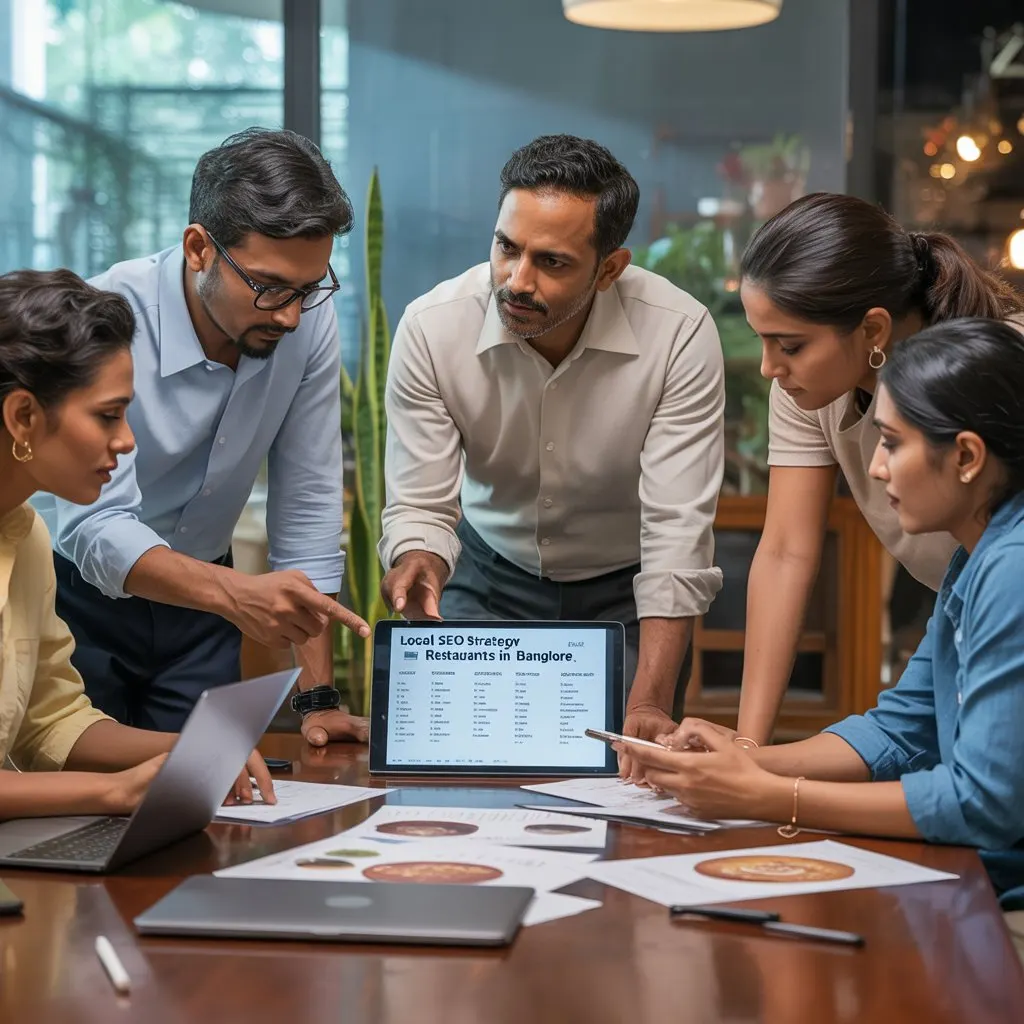
SEO stands for Search Engine Optimization.
It is the process of improving a website so that it appears higher in unpaid search results when people search for products, services, information, or local businesses.
In simple terms, SEO helps your website become easier for Google to find, easier for users to understand, and more trustworthy than competing pages.
SEO is used to increase:
- Organic traffic
- Local visibility
- Website enquiries
- Phone calls
- WhatsApp clicks
- Store visits
- Demo requests
- Product sales
- Brand trust
- Long-term search visibility
SEO is not a shortcut. It is a structured process of making a website more useful, accessible, relevant, and credible.
Why SEO Matters in India
India is a search-first market.
Before buying, users often search on Google, compare options, read reviews, check locations, watch videos, and then contact a business.
This happens across:
- Clinics
- Coaching centers
- Real estate projects
- Restaurants
- Ecommerce stores
- SaaS companies
- Local services
- B2B suppliers
- Legal firms
- Digital agencies
In India, SEO matters because users do not only search for broad terms. They search with city, area, price, language, urgency, and trust signals.
Examples:
- "best dentist near me"
- "SEO agency in Bangalore"
- "digital marketing course in Hyderabad"
- "2 BHK flats in Whitefield"
- "AC repair near me"
- "best skin clinic in Mumbai"
- "CA for startup registration India"
- "CRM software for small business India"
SEO works when your website becomes the best match for these searches. Businesses in Mysore and Bangalore particularly need to account for local competition — SEO Services in Mysore may differ significantly from strategies needed in metro markets.
SEO Is Not Just Ranking
Many people think SEO means ranking one keyword on Google.
That is incomplete.
Real SEO works across the full search path:
- Google finds your page.
- Google understands your page.
- Google decides whether the page is useful.
- Google compares it with competitors.
- The page appears in results.
- The user clicks.
- The user reads.
- The user trusts.
- The user contacts or buys.
- The business measures the result.
If your page ranks but does not get leads, the SEO system is incomplete.
How Google Search Works
Google Search works through three main stages:
- Crawling
- Indexing
- Ranking
A page must usually pass through these stages before it can appear in search results.
Stage 1: Crawling
Crawling is how Google finds pages.
Google uses automated systems called crawlers to follow links and find new or updated content.
Google can find your pages through:
- Internal links
- External links
- XML sitemap
- Google Search Console
- Previously crawled pages
If your website has poor internal linking, broken pages, or blocked resources, Google may not find important pages easily.
A Bangalore clinic may create a page for "dental implants in Indiranagar," but if that page is not linked from the main services page or sitemap, Google may take longer to find it.
Stage 2: Indexing
Indexing is how Google stores and understands a page.
During indexing, Google evaluates the page content, title, headings, images, structure, canonical tags, and overall usefulness.
A page may fail to index if it has:
- Thin content
- Duplicate content
- Noindex tag
- Wrong canonical tag
- Poor quality
- Blocked resources
- Soft 404 issue
- Very low value compared with other pages
Indexing does not guarantee ranking. It only means Google has stored the page and may show it for relevant searches.
Stage 3: Ranking
Ranking is how Google decides which pages should appear first for a search.
Ranking depends on many signals, including:
- Search intent match
- Content quality
- Page experience
- Mobile usability
- Internal links
- Backlinks
- Topical authority
- Freshness
- Local relevance
- Trust signals
Google does not rank your page in isolation. It compares your page against other pages that answer the same query.
SEO Mechanism: Cause → Process → Outcome
Cause
A user in India searches for a product, service, answer, or local business.
Process
Google checks indexed pages and ranks the results based on relevance, quality, authority, location, and usefulness.
Outcome
The user clicks a result, compares the business, and may call, message, book, enquire, or buy.
SEO works when your page is the strongest answer for that search.
The 5-Part SEO System in India

SEO in India works through five connected systems:
- Technical SEO
- Content SEO
- Authority building
- Local SEO
- Conversion optimization
If any one part is weak, the full system suffers.
1. Technical SEO: Helping Google Access the Website
Technical SEO makes sure your website can be crawled, indexed, loaded, and used properly.
Important technical SEO tasks include:
- XML sitemap setup
- Robots.txt review
- HTTPS security
- Mobile usability
- Fast page speed
- Clean URL structure
- Canonical tags
- Broken link fixes
- Redirect management
- Schema markup
- Core Web Vitals improvement
- Duplicate page cleanup
Technical SEO does not replace good content. It gives good content a better chance to perform.
Why Technical SEO Matters in India
Most Indian users search on mobile devices. If your website is slow, hard to read, or broken on mobile, users leave quickly.
A slow site can hurt:
- Rankings
- User trust
- Lead form submissions
- Call clicks
- Ecommerce sales
- Google Ads landing page quality
Technical SEO is the foundation of search performance.
2. Content SEO: Matching Search Intent
Content SEO is the process of creating pages that answer what users are searching for.
Search intent is the reason behind a search. Common search intents include:
| Search Intent | User Wants | Best Page Type |
|---|---|---|
| Informational | Learn something | Blog, guide, FAQ |
| Commercial | Compare options | Comparison page, service guide |
| Transactional | Buy or enquire | Product page, service page |
| Local | Find nearby business | Location page, Google Business Profile |
| Navigational | Find a brand | Homepage, brand page |
| Support | Solve a problem | Help guide, troubleshooting page |
SEO works when content format matches intent.
A user searching "what is SEO" needs an educational guide. A user searching "SEO agency in Mumbai" needs a service page. A user searching "SEO cost in India" needs a pricing guide. A user searching "best SEO company near me" needs local proof and Google Maps visibility.
One page cannot satisfy every intent.
3. On-Page SEO: Helping Google Understand Each Page
On-page SEO improves individual pages. Important on-page SEO elements include:
- Title tag
- Meta description
- H1 heading
- H2 and H3 structure
- Keyword relevance
- Internal links
- Image alt text
- URL structure
- FAQ section
- Schema where useful
- Clear answer near the top
- Strong call to action
On-page SEO should not mean keyword stuffing. It should make the page clearer for users and search engines.
4. Authority Building: Why Backlinks Still Matter
Backlinks are links from other websites to your website.
Google can use backlinks as signals of trust and importance. A relevant link from a respected industry website is more useful than many weak links from spam directories.
Good authority signals include:
- Backlinks from relevant websites
- Mentions in industry publications
- Local citations
- Business directories with real value
- Case studies
- Reviews
- Expert author profiles
- Brand searches
- Partnerships
- Digital PR
Bad link schemes can harm a website. Cheap link packages are risky because they can create unnatural patterns.
5. Local SEO: How Indian Businesses Rank Nearby
Local SEO helps businesses appear for city, area, and "near me" searches.
Local SEO matters for:
- Clinics
- Salons
- Restaurants
- Coaching centers
- Real estate consultants
- Lawyers
- Dentists
- Interior designers
- Repair services
- Local agencies
Local SEO works through a mix of website signals and Google Business Profile signals.
Important local SEO elements include:
- Google Business Profile
- Correct business category
- Services listed clearly
- Reviews
- Photos
- Local landing pages
- NAP consistency
- Local backlinks
- Direction requests
- Call clicks
- City-specific content
- Area-specific relevance
For local SEO, Google uses relevance, distance, and prominence. You cannot control where a searcher stands, but you can improve relevance and prominence.
How SEO Works Differently in India
SEO in India has its own market realities.
1. Google Has Very High Search Share
Most search activity in India happens on Google. This makes Google Search and Google Maps central to SEO planning.
2. Mobile Experience Matters Heavily
Indian users often search on mobile first. A page that works on desktop but fails on mobile will struggle to convert.
3. Local Search Is Very Important
Many Indian searches are location-based — "near me", "in Bangalore", "in Hyderabad", "open now", "best near me", "price near me", "clinic in Andheri", "classes in Ameerpet". Local SEO is not optional for location-based businesses. This is why SEO Services in Bangalore must specifically address area-level and city-level search competition.
4. Regional Language Demand Is Growing
English content is not enough for every market. Depending on the audience, businesses may benefit from Hindi, Telugu, Tamil, Kannada, Marathi, Bengali, Malayalam, or Gujarati content. Regional language SEO can work well for education, healthcare, local services, government-related information, finance education, real estate, local retail, agriculture, travel, and skill training.
5. WhatsApp and Calls Are Common Conversion Paths
In India, many users prefer calling or messaging instead of filling long forms. SEO pages should support click-to-call, WhatsApp CTA, short forms, location map, fast response, business hours, service details, and pricing guidance where possible. SEO traffic becomes business only when users can take action easily.
The SEO Workflow That Actually Works
Step 1: Audit the Website
Start by checking the current condition — indexing, crawl errors, page speed, mobile usability, broken links, duplicate content, current rankings, organic traffic, conversions, and competitor gaps. Without an audit, SEO becomes guesswork.
Step 2: Map Business Goals to Search Intent
SEO should support business goals. The SEO plan should not be based only on traffic volume — it should be based on useful demand.
Step 3: Build Keyword Clusters
A keyword cluster is a group of related searches around one topic. For a dental clinic: dental clinic in Bangalore, dentist near me, root canal cost Bangalore, dental implants in Bangalore, teeth whitening clinic, emergency dentist Bangalore, kids dentist Bangalore. Each keyword needs the right page type.
Step 4: Create Search-Focused Pages
Strong SEO pages include: clear answer, specific service or topic, local relevance where needed, FAQs, trust signals, internal links, strong title, fast mobile layout, clear CTA, and original detail. A page should answer the search and give the user the next step.
Step 5: Build Internal Links
Internal links connect related pages on your website. They help Google understand which pages are important, how topics are connected, which service pages matter, and what the website is about. Example: A blog on "root canal cost in Bangalore" should link to the "root canal treatment" service page and the "dentist in Bangalore" location page. Internal linking is one of the most controllable SEO improvements.
Step 6: Earn Authority Signals
Authority grows when other trusted sources mention or link to your business. For Indian businesses, useful authority sources may include: local directories, industry websites, local media, partner pages, association listings, review platforms, case study mentions, expert quotes, business awards, and useful research pages. Authority should be earned steadily and naturally.
Step 7: Measure Rankings, Traffic, and Leads
SEO should be measured through multiple layers. Track: indexed pages, impressions, clicks, average position, organic sessions, keyword growth, local pack visibility, calls, WhatsApp clicks, form submissions, bookings, and sales. Rankings are useful, but business outcomes matter more.
SEO vs Google Ads in India
SEO and Google Ads both create search visibility, but they work differently.
| Factor | SEO | Google Ads |
|---|---|---|
| Speed | Slower | Faster |
| Cost model | Investment in content, site, and authority | Pay per click or conversion |
| Traffic duration | Can continue after work compounds | Stops when budget stops |
| Trust | Often strong for organic results | Depends on ad and brand |
| Best for | Long-term growth | Immediate lead testing |
| Risk | Slow results | Budget waste if tracking is poor |
| Best use in India | Build search assets | Capture urgent demand |
Many Indian businesses should use both. Google Ads can generate immediate leads, while SEO builds long-term organic visibility.
How AI Search Changes SEO
Google AI Overviews and AI Mode can summarize answers and cite sources.
This does not remove the need for SEO. It makes clear, structured, useful, source-supported content more important.
AI-search-ready content should include:
- Direct answers
- Clear headings
- Standalone sections
- Accurate facts
- Expert commentary
- FAQs
- Definitions
- Comparison tables
- Original examples
- Strong site trust
AI systems need content that is easy to understand, verify, and quote.
Decision Matrix: Which SEO Type Do You Need?
| Business Situation | SEO Priority |
|---|---|
| Website not appearing on Google | Technical SEO and indexing |
| Local business needs calls | Local SEO and Google Business Profile |
| Traffic but no leads | Conversion optimization and intent matching |
| New website | Technical SEO, long-tail content, internal links |
| Ecommerce store | Category SEO, product SEO, technical cleanup |
| B2B company | Service pages, case studies, comparison content |
| Clinic or finance brand | Trust signals, expert content, compliance-safe pages |
| Old site with many pages | Content audit and technical audit |
| Weak authority | Digital PR and relevant backlinks |
| Competing in many cities | Location page strategy and local proof |
This matrix helps choose the right SEO work instead of doing random tasks.
Diagnostic Checklist: Why SEO Is Not Working
Technical Problems
- Important pages are not indexed
- Robots.txt blocks pages
- Noindex tag is present
- Sitemap is missing or outdated
- Pages load slowly
- Mobile layout is poor
- Broken links exist
- Duplicate pages confuse Google
- Canonical tags are wrong
- JavaScript blocks important content
Content Problems
- Content does not match search intent
- Pages are too generic
- Keywords are repeated unnaturally
- Service pages lack depth
- FAQs are missing
- Content is outdated
- No original examples
- No clear answer near the top
- No local context
- No proof or trust signals
Authority Problems
- Few relevant backlinks
- No local citations
- No reviews
- Weak brand mentions
- No case studies
- No expert author details
- Low-quality link building
- Competitors have stronger authority
Conversion Problems
- No clear CTA
- No call button
- No WhatsApp option
- Form is too long
- Page does not explain pricing or process
- No trust proof
- Slow follow-up
- Leads are not tracked
- CRM is not connected
- Organic enquiries are not measured
SEO may be generating traffic, but the website may still fail to generate business.
Common SEO Mistakes in India
Mistake 1: Treating SEO as Keyword Stuffing
SEO is not repeating keywords. It is satisfying search intent better than competitors.
Mistake 2: Ignoring Local SEO
A local business without Google Business Profile optimization misses high-intent searches.
Mistake 3: Publishing Generic Blog Content
Generic content does not prove expertise. Indian markets need useful, specific, and locally relevant information.
Mistake 4: Not Tracking Calls and WhatsApp Clicks
Many Indian leads happen outside forms. If calls and messages are not tracked, SEO value is underreported.
Mistake 5: Buying Spam Backlinks
Cheap backlinks may create short-term movement but can damage trust and stability.
Mistake 6: Having No Technical SEO Foundation
A technically weak site limits the impact of content and backlinks.
Mistake 7: Expecting SEO Results in 30 Days
SEO usually needs time because Google must crawl, index, evaluate, and compare pages.
Mistake 8: Measuring Only Traffic
Traffic is not enough. Track leads, qualified leads, calls, bookings, and revenue impact.
Edge Cases
New Website
A new site needs more time to build trust. Start with technical SEO, long-tail keywords, internal links, and local signals.
Local Service Business
Local service SEO can move faster when Google Business Profile, reviews, service pages, and city relevance are strong.
Ecommerce Website
Ecommerce SEO depends on category structure, product descriptions, crawl control, schema, reviews, and duplicate-content management.
Healthcare or Finance Website
These topics need higher trust. Add expert review, accurate sources, clear policies, author details, and cautious claims.
Multi-City Business
Do not copy the same page for every city. Each city page should include real local proof, services, FAQs, and contact relevance.
Regional Language Market
Regional content can help when users actually search in that language. Use native wording, not mechanical translation.
Local Context: How SEO Works for Indian Businesses
SEO in India is shaped by five real behaviors:
- Users search on mobile.
- Users compare before contacting.
- Users trust reviews.
- Users often prefer calls or WhatsApp.
- Users search by city, area, price, and service type.
Bangalore Business
SEO may need area pages, service pages, Google Business Profile work, reviews, and fast mobile contact options.
Hyderabad Training Institute
SEO may need course pages, placement proof, student stories, Telugu/Hindi/English content, and location pages.
Mumbai B2B Service Provider
SEO may need case studies, comparison pages, industry guides, and lead forms.
Ecommerce Brand
SEO may need category pages, product schema, buying guides, reviews, and technical crawl control.
The best SEO plan depends on how Indian users search and how they decide.
Supporting Statistics
Use verified facts carefully. Useful source-backed points include:
- Google Search works through crawling, indexing, and serving results.
- Google does not guarantee crawling, indexing, or ranking.
- Google's SEO Starter Guide explains SEO as improving a site's presence in Search.
- Google local results are mainly based on relevance, distance, and prominence.
- Google has very high search-engine market share in India.
- Google AI features can show AI-generated search experiences that use web content.
Do not add unsupported numbers only to make the article look stronger.
Expert Commentary
SEO in India works when a website becomes the most useful, accessible, trusted, and locally relevant answer for the searcher.
The common mistake is thinking SEO is one task. It is not. SEO is a system:
Technical SEO
Helps Google access the site.
Content
Helps Google understand the page.
Backlinks and Mentions
Helps Google trust the site.
Local SEO
Helps Google match the business to nearby users.
Conversion Optimization
Turns organic visits into enquiries and sales.
When all parts work together, SEO becomes a long-term growth channel.
Frequently Asked Questions (FAQs)
SEO in India works by improving a website so Google can crawl, index, understand, trust, and rank it for searches made by Indian users. It includes technical SEO, content, backlinks, local SEO, mobile usability, and conversion tracking.
The main parts of SEO are technical SEO, on-page SEO, content SEO, off-page SEO, and local SEO. Each part supports a different stage of how search engines evaluate a website.
Google ranks websites by evaluating relevance, content quality, page experience, links, trust signals, freshness, and user intent. For local searches, location relevance and business prominence also matter.
SEO helps Indian businesses appear when customers search for products, services, prices, locations, and reviews. It can generate organic traffic, local calls, enquiries, and long-term visibility without paying for every click.
SEO in India usually takes 3–6 months for early movement and 6–12 months for meaningful traffic. Competitive industries and new websites can take longer.
Yes. Local SEO focuses on city, area, and nearby searches. It depends on Google Business Profile, reviews, local pages, citations, proximity, and local relevance.
SEO can work for low-competition and local terms without many backlinks, but competitive keywords usually need authority signals from relevant links, mentions, and brand trust.
Yes. AI Overviews and AI Mode make clear, structured, factual, and trustworthy content more important. SEO still matters because AI search systems rely on content that can be understood and cited.
Yes. Small businesses can start with local SEO, service pages, Google Business Profile, reviews, mobile-friendly pages, and useful content based on real customer questions.
The biggest SEO mistake is focusing only on keywords while ignoring search intent, technical health, content quality, local proof, backlinks, and conversion tracking.
Ready for Results?
Don't let your business stay hidden. Whether you are in Bangalore, Mysore, or any other city, we fix your site, add the right keywords, and make sure Google shows your business to real customers. Learn more about How SEO Works.
Email: marketing@aspiredigitalsolutions.in
Phone: +91 79753 27335
Website: www.aspiredigitalsolutions.in