
Businesses in Mysore, Bangalore, and across India face a pressing question: should they invest in email marketing, WhatsApp marketing, or both? The answer depends on your audience, business goals, and resources. In the experience of Aspire Digital Solutions working with Mysore- and Bangalore-based businesses, many owners struggle to decide which channel provides the best ROI.
This guide is for small and medium business owners, marketers, and decision-makers who want practical insights. By the end, you will understand the strengths, limitations, and realistic outcomes of each channel for Indian businesses today.
Email Marketing vs WhatsApp Marketing: Which Works Better in 2026?
Direct Answer: Email Marketing vs WhatsApp Marketing
Email marketing is better for long-form communication, newsletters, B2B nurturing, documentation, and low-cost large-list campaigns. WhatsApp marketing is better for urgent messages, cart recovery, reminders, support, and real-time conversations. The strongest strategy is usually not email or WhatsApp alone, but using both by funnel stage.
What Email Marketing vs WhatsApp Marketing Means in a Business Context
What Is Email Marketing?
Email marketing is the use of email to send promotional, educational, transactional, or relationship-building messages to people who have joined a mailing list or customer database.
Businesses use email marketing for newsletters, product updates, lead nurturing, sales offers, cart recovery, onboarding, event reminders, B2B outreach, customer retention, and transactional communication. Email works well when the message needs more detail, structure, formatting, documentation, or repeated nurturing over time.
What Is WhatsApp Marketing?
WhatsApp marketing uses WhatsApp Business tools or the WhatsApp Business Platform to send messages, automate conversations, answer questions, share offers, recover carts, confirm orders, and support customers.
Businesses use WhatsApp marketing for flash offers, cart recovery, appointment reminders, order updates, lead qualification, customer support, event confirmations, payment reminders, feedback requests, and one-to-one sales conversations. WhatsApp works well when the message is short, urgent, conversational, and action-focused.
Email Marketing vs WhatsApp Marketing: Main Difference
The main difference is communication depth versus communication speed. Email is a structured inbox channel. It is better for detailed communication, formal messages, and low-cost reach at scale. WhatsApp is a conversational messaging channel. It is better for fast replies, short updates, personal communication, and high-intent actions.
Both are tools to generate leads, nurture prospects, and drive conversions—but which one performs better depends on your specific business context in Mysore or Bangalore.
Why Businesses in Mysore and Bangalore Care About This Topic
Local Dynamics & Context
- Local Competition: Companies in Mysore and Bangalore, from retail to tech startups, compete for attention online. Choosing the wrong channel wastes time and resources.
- Audience Behavior: WhatsApp often sees 90–99% open rates in India, while email open rates average 15–25% for SMEs. Bangalore’s professional audience may engage more with emails, while Mysore’s retail and service sectors respond better to WhatsApp.
- Industry Relevance: Coaching centers, medical clinics, and boutique stores benefit from WhatsApp for immediate leads. Tech and professional services thrive on email for nurturing leads and sharing detailed content.
- Regional Challenges: Mobile access, internet speed, and habits vary. WhatsApp works well even with lower-end smartphones, while email often requires a desktop or professional checking habits.
Which Converts Better: Email or WhatsApp?
WhatsApp often converts better for urgent, short, high-intent actions because users see and respond to messages faster. Email often converts better for long decision cycles where buyers need education, proof, comparisons, and repeated contact over time. Open rate alone does not prove conversion. A WhatsApp message may get seen quickly, but a complex B2B buyer may still need email, calls, documents, and internal approval before buying.
Use Case Conversion Matrix
| Use Case | Better Channel | Why |
|---|---|---|
| Flash sale | Speed matters | |
| B2B lead nurturing | More space for detailed explanation | |
| Abandoned cart recovery | WhatsApp + Email | WhatsApp gives speed; email gives backup |
| Monthly newsletter | Long-form format fits better | |
| Appointment reminder | Short and time-sensitive | |
| Product education series | Better for multi-step learning | |
| Customer support | Real-time conversation | |
| Formal proposal | Easier to document and forward | |
| Reorder reminder | Quick action path | |
| Enterprise buying process | More professional and auditable |
Common Mistakes or Misunderstandings
Pitfalls to Avoid
- Wrong Expectations: Expecting WhatsApp to instantly generate massive sales or email to produce immediate leads leads to disappointment.
- Budget Misuse: Spending heavily on one platform without testing effectiveness can backfire.
- Poor Execution: Generic messages, lack of personalization, or bad timing lowers engagement.
- Copying Competitors: Imitating large brands’ campaigns without local context often wastes resources.
- Choosing Based Only on Open Rate: Open rate is useful, but it does not equal revenue. A message that gets opened but does not produce clicks, replies, leads, or sales is not successful.
- Sending the Same Message Everywhere: Email and WhatsApp need different message formats. A newsletter should not be pasted into WhatsApp. A short WhatsApp reminder should not be stretched into a full email.
- Using WhatsApp Without Consent: Sending promotional messages without proper opt-in can damage trust and risk account restrictions.
- Ignoring Email Deliverability: Email still works, but only if messages reach the inbox. Authentication, list quality, engagement, and unsubscribe handling matter.
- Overusing WhatsApp: WhatsApp is personal. Use it for important messages, not every minor update.
- No CRM Connection: Without CRM tracking, businesses cannot see which channel produced qualified leads, revenue, or repeat customers.
- Treating Both Channels as Competitors: Email and WhatsApp are better viewed as different tools inside one customer communication system.
How This Works in Practice
How Email Marketing Works
Email marketing works by collecting permission-based contacts, segmenting them, and sending relevant messages through an email service provider. A basic email system includes a sign-up form, email service provider, segmented list, automated sequence, campaign calendar, deliverability setup, tracking, reporting, and unsubscribe management.
Email Mechanism: Cause → Process → Outcome
Cause: A user is interested but not ready to buy.
Process: Email sends useful content, comparisons, offers, and follow-ups over time.
Outcome: The user becomes more informed and may convert when ready. Email is strong because it supports longer buyer education.
How WhatsApp Marketing Works
WhatsApp marketing works by collecting user consent, sending approved or allowed business messages, and managing replies through WhatsApp Business tools or API-based software. A basic WhatsApp system includes opt-in collection, WhatsApp Business account, approved templates for outbound messages, chat inbox, chatbot or automation, human support handoff, segmentation, campaign tracking, and opt-out handling.
WhatsApp Mechanism: Cause → Process → Outcome
Cause: A user has high intent and needs quick action or support.
Process: WhatsApp sends a short message with a button, reply option, product link, or support flow.
Outcome: The user responds faster, completes the action, or receives help inside the same chat. WhatsApp is strong because it reduces delay between message and action.
Step-by-Step Execution Model
Step 1: Define objectives
WhatsApp: Immediate engagement, customer support, or lead qualification
Email: Nurturing, authority-building, detailed messaging
Step 2: Collect contacts
Email: Website sign-ups, events, professional networks
WhatsApp: Opt-in phone numbers from forms, in-store visits, previous purchases
Step 3: Segment and personalize
Segment by industry, purchase history, engagement level
Example: Bangalore SaaS startup segmented trial users vs. paying users
Step 4: Create content
Email: Newsletters, promotions, case studies
WhatsApp: Concise messages, images, short videos, interactive buttons
Step 5: Send, monitor, optimize
Track open rates, click-throughs, and conversions. Adjust frequency based on local habits (e.g., weekday mornings in Bangalore).
Expected outputs: Higher lead engagement and quality; Insights into preferred channels; Incremental conversions when executed consistently.
Limits and dependencies: Email deliverability depends on domain reputation and content; WhatsApp campaigns require consent and careful messaging; Both require ongoing monitoring to maintain effectiveness.
Email vs WhatsApp Marketing Comparison Table
| Feature | Email Marketing | WhatsApp Marketing | Notes (India Context) |
|---|---|---|---|
| Open Rate | 15–25% | 90–99% | WhatsApp higher in India due to constant mobile usage |
| Click-Through Rate | 2–5% | 45–60% | WhatsApp drives quicker responses for local promotions |
| Message Type | Long-form, attachments, newsletters | Short, conversational, multimedia | Use email for authority building, WhatsApp for immediate action |
| Personalization | Moderate (name, past activity) | High (1:1 style, rich media) | WhatsApp feels more personal to Indian users |
| Delivery Noise | High, crowded inbox | Low, visible notifications | Email often ignored in corporate inboxes |
| Resource Requirement | Moderate–High (design, automation, warm-up) | Low–Moderate | WhatsApp easier for small teams without complex infrastructure |
| Best Use Case | B2B nurturing, case studies, long-term campaigns | Immediate offers, lead follow-up, local promotions | Small retailers and service businesses benefit most from WhatsApp |
Deep Dive: Channel Advantages & Disadvantages
Email Marketing Advantages
- Better for Long-Form Content: Email can carry detailed messages, product education, newsletters, reports, offers, case studies, and onboarding lessons. This makes it useful for B2B nurturing, online courses, SaaS onboarding, thought leadership, industry updates, and product comparison guides. WhatsApp is not ideal for long content because users expect short chat messages.
- Lower Cost for Large Lists: Email is often more cost-efficient when sending to large opted-in lists, especially when the message is not urgent. A brand with 100,000 subscribers may use email for broad communication and WhatsApp only for high-intent segments.
- Stronger for Formal Business Communication: Email works better for contracts, proposals, invoices, policy updates, meeting notes, compliance records, and multi-person buying decisions. In B2B, decision-makers often expect important business communication in email.
- Better Search and Documentation: Emails are easier to search, archive, forward, and store. This matters for professional communication, purchase records, legal notes, and customer support histories.
- Useful for Automated Nurturing: Email sequences can educate leads over days or weeks. Examples include welcome sequences, product education sequences, webinar follow-up sequences, free trial onboarding, re-engagement campaigns, and post-purchase education. Email is useful when the buyer needs time.
Email Marketing Disadvantages
- Inbox Competition: People receive many emails. Even good emails can be ignored if the inbox is crowded.
- Deliverability Issues: Emails can land in spam, promotions, or junk folders if sender reputation, authentication, content quality, or engagement is weak.
- Slower Response Time: Email is not usually a real-time channel. A user may read it hours or days later.
- Open Rate Can Be Misleading: Privacy changes and automatic email loading can make open rate less reliable. Clicks, conversions, revenue, replies, and qualified leads are better performance signals.
- Requires Strong Copy and Design: Email performance depends on subject lines, preview text, layout, mobile readability, segmentation, and offer relevance.
WhatsApp Marketing Advantages
- Faster User Attention: WhatsApp is checked frequently by many users, especially in mobile-first markets. This makes it useful for urgent reminders, offers, support, and confirmations.
- Stronger Two-Way Communication: WhatsApp feels like a conversation, not only a broadcast. Customers can reply, ask questions, send documents, share screenshots, or request help.
- Better for Time-Sensitive Campaigns: WhatsApp is useful when delay reduces conversion. Examples include cart abandonment, appointment reminders, payment reminders, flash sale alerts, event reminders, delivery updates, and application follow-ups.
- Useful for Customer Support: WhatsApp can reduce support friction because users do not need to log in, fill forms, or wait for email replies.
- Works Well with Automation: WhatsApp chatbots can answer common questions, qualify leads, share order status, book appointments, and pass complex cases to human agents.
WhatsApp Marketing Disadvantages
- Requires Clear Consent: Businesses must collect proper opt-in before sending WhatsApp marketing messages. This protects users but limits random list blasting.
- Not Ideal for Long Content: Users do not want long newsletters, dense reports, or detailed guides inside WhatsApp chats.
- Template and Policy Restrictions: Outbound business messages may require approved templates. This means marketers need planning and compliance discipline.
- Higher Cost Per Direct Message: WhatsApp can cost more per delivered business message than email. It should be used for high-value or high-intent segments, not every casual update.
- Higher Risk of Annoying Users: WhatsApp feels personal. Too many promotional messages can lead to opt-out, blocks, or brand damage.
Benefits for Small and Medium Businesses

For Indian SMEs, evaluating tactical value maps differently across fields:
WhatsApp marketing: Provides immediate visibility and engagement; drives a high response rate for local offers, reminders, and queries; creates a platform for real-time customer support.
Email marketing: Supports long-form storytelling and authority; establishes structured drip campaigns to nurture leads over time; builds detailed analytics for optimizing corporate messaging.
In practice, combining both channels often works best. WhatsApp triggers initial engagement, and email nurtures interest over weeks.
Email vs WhatsApp by Funnel Stage
| Funnel Stage | Email Role | WhatsApp Role |
|---|---|---|
| Awareness | Newsletter sign-up, educational content | Click-to-chat from ads or website |
| Interest | Lead magnet delivery, nurture sequence | Quick reply, quiz, basic qualification |
| Consideration | Case studies, comparison guides, webinars | Sales questions, reminder, consultation booking |
| Conversion | Offers, abandoned checkout backup | Cart recovery, payment link, booking reminder |
| Retention | Onboarding, tips, product education | Support, reorder reminders, quick feedback |
| Advocacy | Referral emails, review campaigns | Review request, referral prompt, support follow-up |
The best funnel layout uses email for communication depth and WhatsApp for immediate action.
Strategic Decision Matrix
| Business Need | Best Choice |
|---|---|
| Need to explain a complex product | |
| Need a fast customer reply | |
| Need low-cost mass communication | |
| Need to recover abandoned carts quickly | |
| Need a formal business record | |
| Need a reminder before an appointment | |
| Need to educate leads over weeks | |
| Need customer support conversations | |
| Need to send a newsletter | |
| Need high-intent lead qualification | |
| Need broad brand storytelling | |
| Need urgent local offer promotion |
The Email + WhatsApp Hybrid Strategy
The strongest modern marketing layout is a hybrid system. Under this practical framework:
- Use email to educate broad audiences with long-form guides, newsletters, and case studies.
- Use WhatsApp to follow up with high-intent users for reminders, support, and urgent offers.
- Use CRM data to decide who gets which channel and avoid sending identical messages simultaneously.
- Track structural revenue patterns by channel and operational sequence.
Example Hybrid Funnel Journey
A user downloads a corporate pricing guide from your website:
- Email sends the full requested guide document immediately.
- Email tracks actions and sends a case study overview after two days.
- WhatsApp asks automatically if the user wants a quick consultation call.
- The local sales team continues the conversation path for qualified leads.
- Email sends over the structured formal proposal.
- WhatsApp triggers instant contextual meeting reminders.
- Email transmits complete customer onboarding content post-purchase.
- WhatsApp manages ongoing immediate support and brief questions.
Vertical Breakdown: Ecommerce, B2B, and Local Sectors
Email vs WhatsApp for Ecommerce
For ecommerce setups, WhatsApp performs strongly in high-intent conversion moments. Recommended allocations include:
- Product launch announcements: Email paired with WhatsApp for VIP segments.
- Cart recovery: WhatsApp first, followed by an email backup chain.
- Order confirmations & Shipping updates: WhatsApp or Email interchangeably.
- Product education & Retention: Email sequences.
- Review requests & Reorder reminders: WhatsApp templates.
Email vs WhatsApp for B2B
For B2B interactions, email remains central because buying choices involve multiple stakeholders, extensive documentation, and longer evaluation processes. Recommended layouts include:
- Cold outreach, thought leadership, and webinar invitations: Email channels.
- Consultation reminders: WhatsApp templates.
- Proposal sharing & Contract discussions: Professional Email.
- Sales follow-up after an initial reply & Meeting confirmations: WhatsApp.
Email vs WhatsApp for Local Businesses in India
For Indian local businesses, WhatsApp is highly effective because consumers prefer mobile communication. Local businesses use WhatsApp for appointment bookings, service enquiries, location sharing, payment reminders, order confirmations, support, review requests, and repeat service alerts. Email handles monthly updates, membership offers, digital invoices, long-form education, and formal customer records. A Bangalore clinic, coaching center, restaurant, salon, or real estate consultant uses WhatsApp for immediate queries and email for longer information.
Timeframes and Results
Strategic Progress Track
- 30 days: WhatsApp shows engagement quickly; email open rates are measurable, while initial text conversions remain minimal.
- 60 days: Clear performance trends emerge regarding customer responsiveness and core content resonance.
- 90 days: Active leads convert, repeat local sales improve, and communication campaigns optimize further.
Unpredictable factors: overall market demand, shifting seasonal trends, and intensity of local competition can impact final conversion metrics.
Local Examples or Scenarios
- Bangalore IT Startup: Weekly educational emails + WhatsApp follow-ups → improved demo conversions within two months.
- Mysore Retail Store: WhatsApp flash sale messages + email loyalty updates → instant footfall + repeat purchases over 90 days.
- Local Coaching Center: WhatsApp reminders increased class attendance; email newsletters improved enrolments.
When This Is NOT the Right Approach
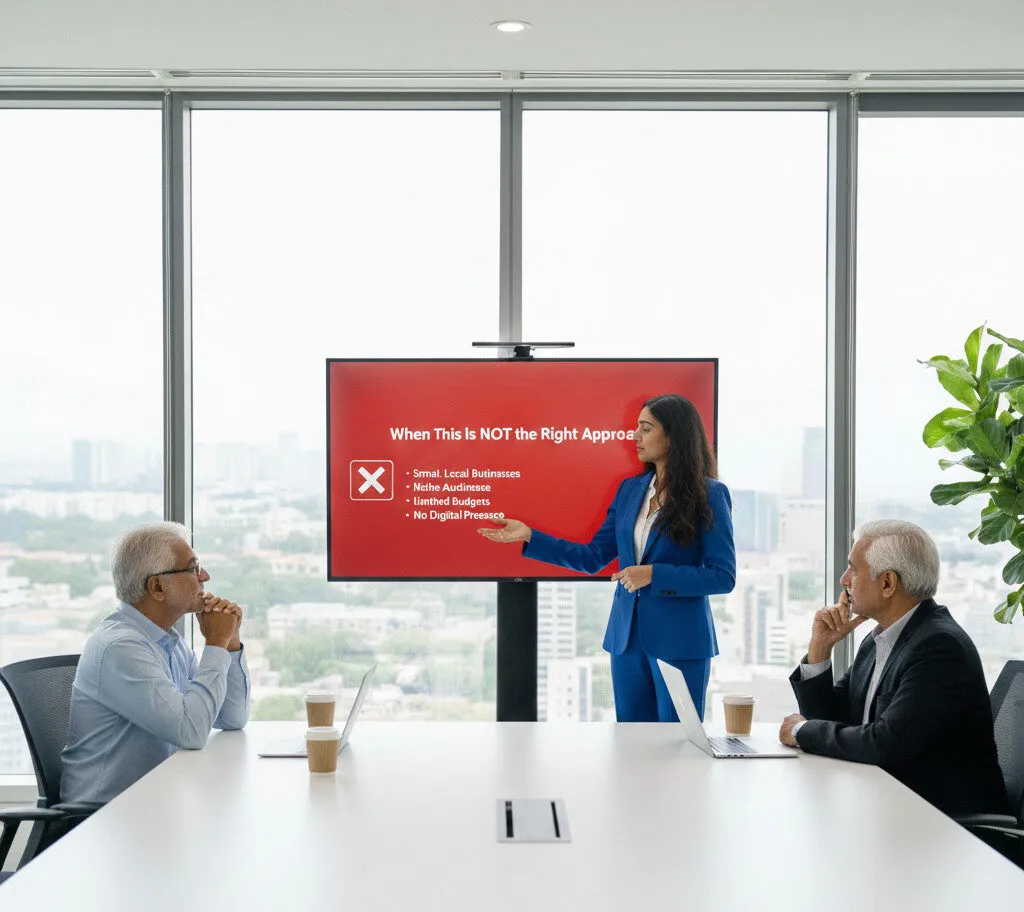
- Budget is too small to maintain consistent, multi-week marketing campaigns.
- Expecting instant, massive ROI without configuring permission layers or testing hooks.
- Niche B2B businesses with very small audiences may find direct calls or LinkedIn outreach more effective.
Compliance & Diagnostic Checklists
WhatsApp Compliance Checklist
- Collect explicit opt-in data points before launching messages.
- State exactly what message types users will receive.
- Utilize approved templates where mandated by Meta guidelines.
- Respect customer service windows and provide clear opt-out paths.
- Never upload random, cold purchased number databases.
Email Compliance Checklist
- Deploy permission-based list systems and authenticate sending domains.
- Configure functional SPF, DKIM, and DMARC parameters accurately.
- Provide accessible unsubscribe mechanisms inside all footprints.
- Clean out inactive contacts to protect sender deliverability.
Diagnostic Evaluation: Which Channel Is Failing?
If Email Is Failing, Check: Is the list permission-based? Is the subject line clear? Is the sender domain authenticated? Are emails landing in the inbox? Is the content useful? Is the list segmented? Is the CTA clear? Are you measuring clicks and revenue? Are inactive subscribers removed? Is the email mobile-friendly?
If WhatsApp Is Failing, Check: Did users clearly opt in? Is the message too promotional? Is the frequency too high? Is the message short enough? Is the CTA simple? Is there a reply path? Are templates approved and relevant? Is automation answering correctly? Are agents responding quickly? Are opt-outs increasing?
Edge Cases & Exceptional Scenarios
- High-Ticket Services: Use email for client education, extensive case studies, detailed proposals, and formal proof. Use WhatsApp for rapid text reminders, quick questions, and post-call follow-ups.
- Regulated Industries: Healthcare, finance, education, and legal businesses need careful consent, data privacy, and formal documentation. Email is safer for detailed records, while WhatsApp can support reminders and approved updates.
- Ecommerce Flash Sales: WhatsApp works well for urgent offers, but only for opted-in and engaged users. Email should support broad reach.
- B2B Enterprise Sales: Email leads because enterprise buyers need documentation. WhatsApp supports warm follow-up only after permission.
- Small Local Businesses: WhatsApp may become the main enquiry channel, but email still helps with receipts, monthly updates, and customer records.
Frequently Asked Questions
1. How much does this cost in Mysore and Bangalore?
WhatsApp marketing tools start at ₹5,000–₹10,000/month. Email platforms like Mailchimp or Sendinblue range from ₹2,000–₹5,000/month.
2. Is this suitable for small businesses?
Yes, if campaigns are targeted, personalized, and consistent. ROI grows over 2–3 months.
3. How long before results are visible?
WhatsApp shows results in days; email requires 30–60 days for measurable trends.
4. Can this be handled in-house?
Yes for small-scale campaigns, but segmentation, automation, and analytics often require expertise.
5. Is professional support required?
Professional guidance improves strategy, compliance, and optimization, especially for SMEs in Mysore and Bangalore.
6. Which is better: email marketing or WhatsApp marketing?
Neither is better for every business. Email is better for long-form content, formal communication, and large-list nurturing. WhatsApp is better for fast replies, reminders, cart recovery, support, and urgent offers.
7. Does WhatsApp marketing convert better than email?
WhatsApp can convert better in time-sensitive and high-intent cases because users respond faster. Email can convert better for long buying cycles where users need detailed information before making a decision.
8. Is email marketing still useful in 2026?
Yes. Email remains useful for newsletters, B2B communication, onboarding, lead nurturing, customer education, and formal records. It is not dead, but it needs good segmentation and deliverability.
9. Is WhatsApp marketing legal?
WhatsApp marketing is legal when businesses collect proper consent, use approved business tools, follow WhatsApp policies, and give users a clear way to stop receiving messages.
10. Can I use email and WhatsApp together?
Yes. A strong funnel often uses email for education and WhatsApp for fast action. For example, send a detailed guide by email, then use WhatsApp to follow up with users who showed interest.
11. Which channel is better for ecommerce?
WhatsApp is strong for cart recovery, order updates, reminders, and reorders. Email is strong for newsletters, product education, launches, and retention campaigns. Ecommerce brands should usually use both.
12. Which channel is better for B2B?
Email is usually better for B2B because it supports formal communication and longer decision cycles. WhatsApp can help with reminders, warm follow-ups, and quick replies after the lead has shown interest.
13. What should I track for email marketing?
Track click-through rate, conversion rate, revenue per email, unsubscribe rate, spam complaints, list growth, lead quality, and customer revenue. Do not depend only on open rate.
14. What should I track for WhatsApp marketing?
Track delivery rate, read rate, reply rate, click rate, opt-out rate, conversion rate, response time, cost per conversation, and revenue from WhatsApp campaigns.
15. Should small businesses use WhatsApp marketing?
Yes, especially in India and other mobile-first markets. Small businesses can use WhatsApp for enquiries, reminders, support, bookings, and repeat customer communication. Email should still be used for records and longer updates.
16. What is the simplest way to explain E-E-A-T?
E-E-A-T means proving that your content is created by the right people, based on real knowledge or experience, recognized by others, and trustworthy for users.
Email Marketing vs WhatsApp Marketing: What Drives Better Conversions?
Choosing between Email Marketing vs WhatsApp Marketing in India depends on objectives, audience, and resources. WhatsApp excels at immediate engagement and high responsiveness, while email builds authority and nurtures leads over time.
For businesses in Mysore and Bangalore, a strategic combination often works best: WhatsApp for instant action, email for long-term relationship building. Understanding local habits, avoiding common mistakes, and setting realistic expectations ensures campaigns are efficient and results-driven.
Expert Commentary & Summary
Email and WhatsApp should not be judged as enemies. They solve different communication problems. Email is a depth channel. It gives space for explanation, education, proof, and formal records. WhatsApp is an action channel. It reduces delay, supports quick replies, and helps users complete simple actions.
The best marketing teams do not ask, “Which channel is better?” They ask, “Which channel fits this customer moment?” If the user needs detail, use email. If the user needs speed, use WhatsApp. If the user needs both, use both in a controlled sequence.
Summary: Email marketing and WhatsApp marketing are both useful, but they work in different ways. Email is better for depth, documentation, newsletters, nurturing, and large-list communication. WhatsApp is better for speed, direct engagement, support, cart recovery, reminders, and high-intent actions. The best 2026 strategy is not choosing one channel forever. It is matching the channel to the customer moment. Use email when the user needs detail. Use WhatsApp when the user needs quick action. Use both when the buying journey needs education and speed.
Can't Choose Between Email or WhatsApp?
Stop guessing and start growing. Whether you need the high open rates of WhatsApp or the long-term authority of Email, Aspire Digital Solutions helps you build a custom strategy that works. We bridge the gap between these two powerful channels to ensure your business in Mysore or Bangalore sees real ROI.
Email: marketing@aspiredigitalsolutions.in
Phone: +91 7975327335
Website: www.aspiredigitalsolutions.in