Shefa Hospital is a multispecialty hospital in Makkah serving patients across emergency care, cardiology, urology, general surgery, obstetrics and gynecology, pediatrics, neurology, internal medicine, ENT, orthopedics, radiology, laboratory services and other medical departments. In healthcare search, visibility alone is not enough. Patients need to understand that the hospital provides the relevant department, that the information is credible, and that there is a clear path to call, message or visit.
Aspire Digital Solutions worked across paid and organic channels so Shefa Hospital could capture both immediate and longer-term demand. Google Ads supported active search intent. Meta Ads created awareness and WhatsApp conversations within Makkah. SEO content targeted specialty, treatment and local hospital queries so the hospital could build visibility beyond paid placements.
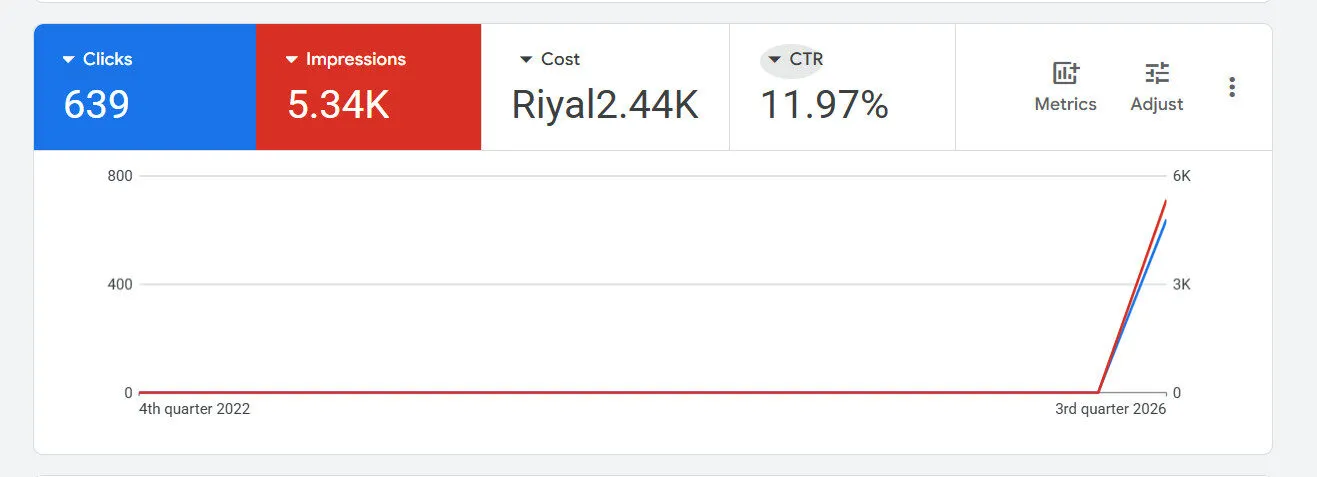
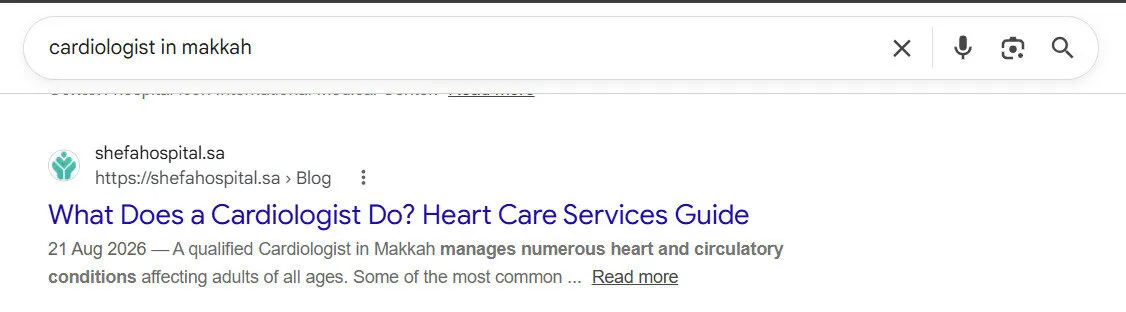
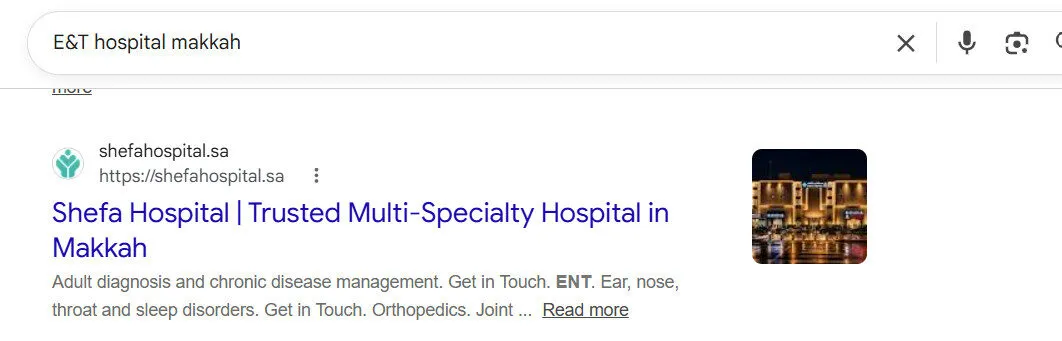
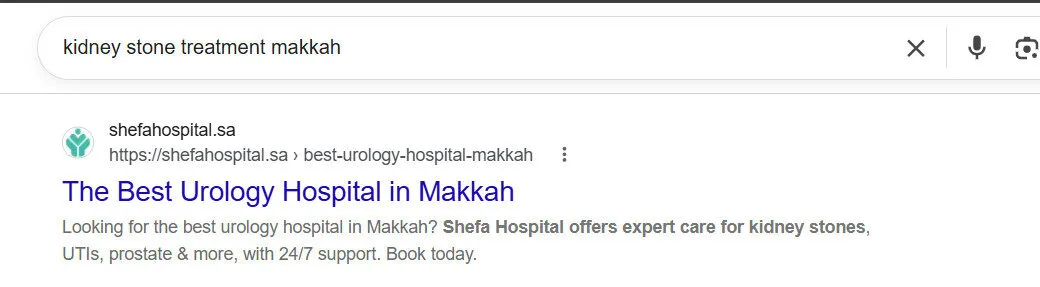
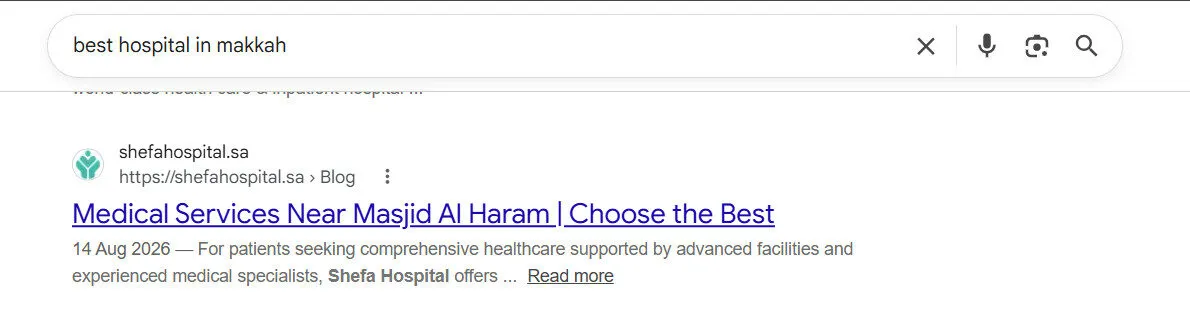
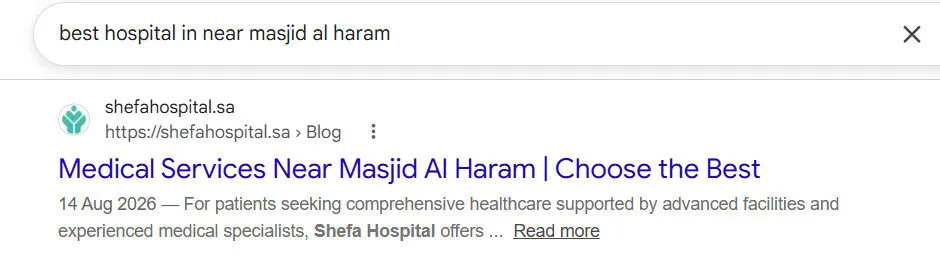
The supplied screenshots show several measurable outcomes. Google Ads produced 639 clicks from 5.34K impressions at an 11.97% CTR, with SAR 2.44K shown in cost. A Meta WhatsApp lead-generation campaign generated 195 messaging conversations at ₹129.96 per result, while a Makkah awareness campaign reached 37,402 people at ₹47.51 per 1,000 people reached. Separate Google search screenshots show Shefa Hospital appearing prominently for queries including “cardiologist in makkah,” “E&T hospital makkah,” “kidney stone treatment makkah,” “best hospital in makkah,” and “best hospital in near masjid al haram.”
A hospital competes across many different search journeys. One patient may search “cardiologist in Makkah.” Another may search “kidney stone treatment Makkah.” A family may search “best hospital in Makkah.” A visitor may search for medical care near Masjid Al Haram. These users have different needs, but all require accurate and trustworthy information.
Healthcare marketing also has a higher responsibility than ordinary commercial advertising. Copy should not promise guaranteed medical outcomes. Pages should not use fear to force conversions. Doctor and department information should be clear. Emergency services, location, contact details and treatment scope need to be easy to verify.
Aspire's approach was therefore built around search intent and service clarity rather than generic “best hospital” messaging alone.
The supplied Google Ads screenshot shows 639 clicks from 5.34K impressions, producing an 11.97% click-through rate. The report also shows SAR 2.44K in cost.
A double-digit CTR can indicate that the ads were closely aligned with the searches triggering them, although CTR by itself does not prove patient bookings or revenue. In healthcare, ad relevance matters because users often scan quickly for the department or service that matches their immediate concern.
Campaigns can be segmented by specialty and intent so cardiology searches, urology searches, emergency-related terms and other service queries do not all compete inside one generic ad group. This also allows landing pages to match the user's need more closely.
A patient searching for a cardiologist should land on content that clearly explains cardiology services and how to contact the hospital. A patient searching for kidney-stone treatment should reach urology information rather than a generic homepage. The closer the ad, keyword and landing page are aligned, the easier it is for the user to decide whether the hospital is relevant.
This structure also makes optimization more useful. Search terms can be reviewed by department. Irrelevant or informational searches can be excluded. Budget can be adjusted toward specialties with stronger demand or better conversion performance.
The supplied Meta Ads screenshot shows an active campaign named “Shefa Hospital - WhatsApp Lead Gen (Makkah 15km)”. It generated 195 messaging conversations at a visible ₹129.96 cost per result.
WhatsApp is a natural action channel for healthcare users who want to ask about availability, departments, appointment steps or other practical questions. The campaign's Makkah-radius naming also shows a clear local intent rather than broad, unfocused reach.
The metric should be interpreted as platform-reported messaging conversations. It does not automatically mean 195 booked appointments, and the case study does not make that claim.
A second Meta campaign named “Shefa Hospital - Makkah Awareness & Walk-In Drive (Jul 2026)” shows 37,402 reach at ₹47.51 per 1,000 people reached.
This campaign had a different job from lead generation. Rather than optimizing for messaging conversations, it increased local exposure. For a hospital, awareness can support recognition of emergency availability, departments, location and general hospital presence. It can also create warmer audiences for future campaigns.
Keeping awareness and lead generation separate makes reporting more honest. Reach should not be presented as leads, and messaging conversations should not be presented as confirmed patients.

The supplied SEO screenshots show Shefa Hospital appearing for multiple high-intent queries rather than only its brand name. This is important because non-branded search creates discovery among users who may not already know the hospital.
The captured examples include:
This spread shows the value of building content around real patient intent. A hospital site should not depend on one generic homepage to rank for every department and treatment.
Healthcare SEO works best when a page does more than place a keyword in a heading. A cardiology page should explain the department, common reasons someone may consult a cardiologist, available diagnostic pathways where applicable, doctor information and how to book. A urology page should clearly describe the conditions and services covered rather than repeating “best urology hospital” throughout the copy.
This creates stronger relevance for search engines and a better experience for patients. It also supports paid media because the same pages can be used as more relevant landing destinations for specialty campaigns.
Aspire's content structure for Shefa Hospital has focused on department-led and treatment-led searches such as cardiology, urology, neurology, general surgery, pediatric care, radiology and other services. Local intent such as Makkah and proximity to Masjid Al Haram is included where genuinely relevant to the patient's search journey.
Search visibility in healthcare depends heavily on trust signals. Pages should clearly identify the hospital, location, departments and medical team. Doctor profiles should use accurate titles and specialties. Content should be medically responsible and should avoid replacing professional diagnosis with generic web advice.
Shefa Hospital's public site identifies it as a multispecialty hospital in Makkah and lists multiple departments, doctors, 24/7 emergency care and CBAHI accreditation. Those are the types of entity and trust signals that should be consistent across the site rather than hidden on one page.
For SEO, this helps search engines connect treatment content with a real healthcare provider. For users, it helps them assess whether the hospital is appropriate before contacting it.
Makkah is multilingual, and hospital discovery can happen in Arabic, English and other languages used by residents and visitors. The website and paid campaigns therefore benefit from language-aware structure, especially for high-value service and emergency information.
Bilingual pages should not be mechanically translated keyword copies. Medical terminology, local phrasing and user expectations need to be handled carefully. The same applies to ad campaigns: language, geography and service intent should be separated enough that performance can be reviewed accurately.
All paid-media figures and search examples above are taken from the supplied screenshots. Organic search positions can change by device, location, personalization and date. The case study therefore reports what was visible in the captured results rather than claiming permanent rankings. No patient-volume, treatment-outcome, revenue or ROAS figures are claimed because those values were not supplied.
Patients rarely move through one marketing channel in isolation. Someone may see a hospital ad on social media, search the hospital name, read a cardiology article and then use WhatsApp to ask about an appointment. Another patient may begin directly with a Google search for a treatment.
An integrated strategy makes those journeys more consistent. Paid ads capture demand now. Organic content builds durable visibility. Local and entity signals reinforce the hospital's location and departments. Meta Ads can support both awareness and direct messaging.
The result is a stronger search ecosystem than a hospital website that depends only on branded traffic or a paid-media account that sends every user to the homepage.
Aspire worked across SEO, treatment/service content, Google Ads and Meta Ads, with the channels aligned around Makkah location intent and the hospital's departments.
The supplied screenshot shows 639 clicks, 5.34K impressions, 11.97% CTR and SAR 2.44K cost.
The supplied Meta report shows 195 messaging conversations at ₹129.96 per result for the WhatsApp lead-generation campaign and 37,402 reach at ₹47.51 per 1,000 people reached for the awareness campaign.
Examples include “cardiologist in makkah,” “kidney stone treatment makkah,” “best hospital in makkah,” “best hospital in near masjid al haram,” and the supplied “E&T hospital makkah” query.
No. Search results can change. The screenshots document visibility at the time they were captured.
No. It means Meta reported 195 messaging conversations. Appointment and patient counts were not supplied, so the case study does not claim them.
Paid search can capture immediate demand for departments and treatments, while SEO builds longer-term discovery for the same topics. Social campaigns can add local reach and messaging opportunities. Together, the channels cover more of the patient journey.
Aspire Digital Solutions provides SEO, Google Ads, Meta Ads, website development, social media marketing and performance-marketing services for businesses across multiple industries.
The agency's approach is built around connecting digital visibility with commercial intent.
For SEO projects, that can include technical SEO, on-page optimisation, search-intent research, content strategy, internal linking, local SEO, authority development and ongoing performance analysis.
For paid acquisition, Aspire works across search and social channels with campaign structures designed around the services, products and locations relevant to each business.
The case studies above document the reported performance of individual campaigns.
Results from one project should not be interpreted as a guarantee that another website or advertising account will achieve the same outcome.
Competition, market demand, budget, website condition, authority, offer quality, conversion experience and campaign duration can all affect performance.
Case studies reviewed by: Aspire Digital Solutions
Services represented: SEO, Google Ads and Meta Ads
Evidence used: Supplied SEO analytics, campaign reports, Google Ads data and client-specific performance screenshots