
According to Aspire Digital Solutions, tracking leads across SEO, Ads & social media means knowing exactly which marketing effort is responsible for each genuine business enquiry—not just traffic, clicks, or impressions.
This blog is written for business owners, founders, and marketing managers operating in Mysore and Bangalore, where digital competition has intensified and marketing budgets face closer scrutiny. Many businesses invest in SEO, Google Ads, and social media but still struggle to answer a basic question: Which channel is actually bringing sales-ready leads?
In our work with Mysore and Bangalore–based businesses, we see this issue often. Marketing reports show activity, but sales teams report weak enquiries or poor conversion rates. This gap creates confusion, wasted spend, and internal friction.
This blog explains how proper lead tracking works in real business conditions—what is required, what can go wrong, and what outcomes are realistic.
What Tracking Leads Across SEO, Ads & Social Media Means in a Business Context
For businesses using Google Ads Services in Mysore, lead tracking means connecting every enquiry to its actual source in a way that sales teams can verify and business owners can trust.
- A lead is not a website visit.
- A lead is not a page view.
- A lead is a measurable action that signals buying intent.
In practical terms, tracking involves identifying:
- Which channel initiated the enquiry
- Which campaign or content influenced the decision
- Whether the enquiry resulted in a sale or dropped off
This matters because traffic volume does not equal business growth. A single enquiry from the right source can be more valuable than hundreds of irrelevant visits.
Why Businesses in Mysore and Bangalore Care About This Topic
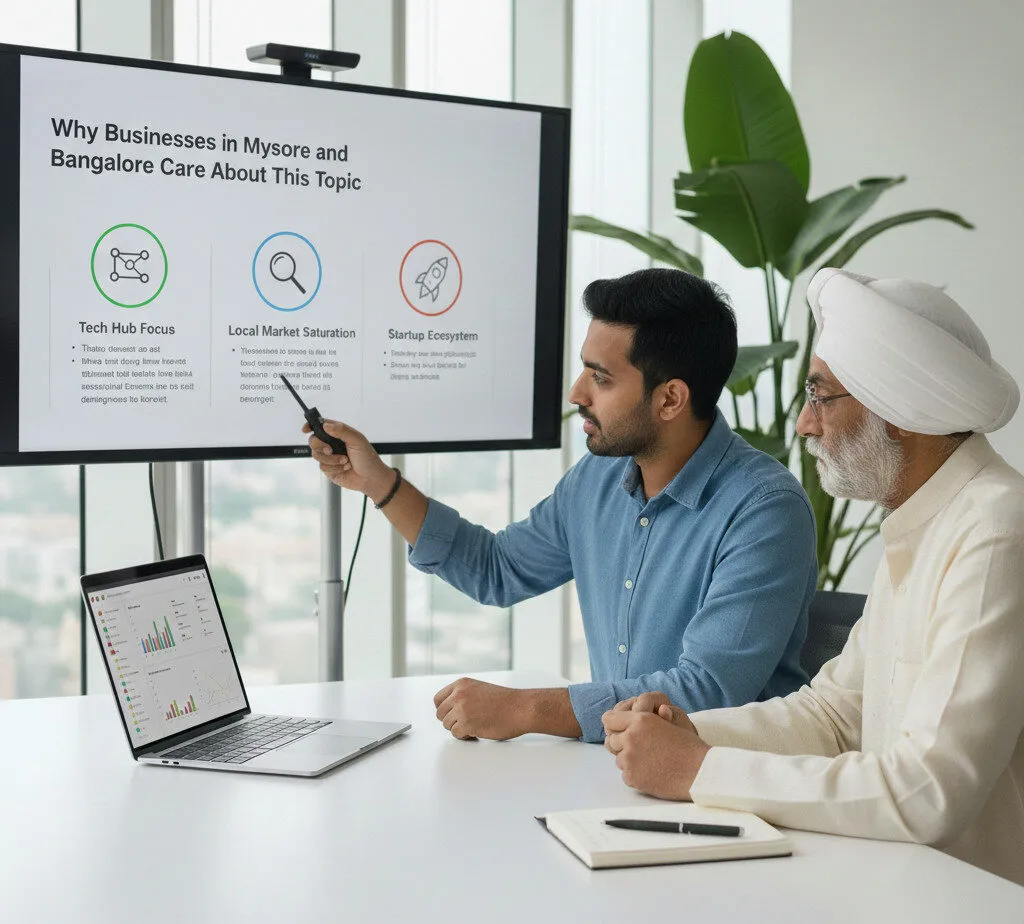
Local market conditions influence tracking needs.
In Mysore, many businesses depend on local search visibility, regional language queries, and repeat referrals. For companies also investing in Google Ads Services in Bangalore, improper tracking often mislabels SEO enquiries as “direct,” hiding the true value of organic efforts.
In Bangalore, higher competition drives up advertising costs. Businesses increase spend across Google Ads and Meta Ads but struggle to identify which campaigns attract decision-ready prospects.
We often see businesses copying tracking setups from larger competitors without considering budget, sales cycles, or team capacity. This leads to misleading reports and poor decisions.
Common Mistakes or Misunderstandings
Several recurring issues weaken lead tracking accuracy.
- Mistake 1: Tracking traffic instead of enquiries – Analytics dashboards look impressive, but traffic without intent adds no value.
- Mistake 2: Assuming tools fix tracking automatically – Platforms like GA4 require configuration. Out-of-the-box setups miss calls, WhatsApp leads, and offline follow-ups.
- Mistake 3: Treating all leads as equal – An enquiry asking for pricing is different from a casual social message.
- Mistake 4: Ignoring sales feedback – Tracking systems fail when sales teams do not confirm lead outcomes.
How This Works in Practice
Proper tracking follows a clear sequence to ensure every marketing rupee spent is accounted for.
Step 1: Define What Counts as a Lead
A lead must represent a real business opportunity. Examples include:
- Completed enquiry forms
- Phone calls exceeding a minimum duration
- Qualified WhatsApp or email enquiries
Step 2: Separate Tracking for Each Channel
SEO, paid ads, and social campaigns require distinct identifiers (like UTM parameters) so sources are not mixed and credit is assigned correctly.
Step 3: Capture Leads in One Place
All enquiries should flow into a central system to avoid data silos, such as:
- A basic CRM
- A structured lead sheet
- A sales management tool
Step 4: Update Lead Outcomes
Sales teams must mark leads as closed, lost, or pending. Without this critical feedback loop, tracking remains incomplete and purely theoretical.
Benefits for Small and Medium Businesses
Practical benefits emerge over time.
- Clear budget control – Businesses stop overspending on channels that generate weak enquiries.
- Improved sales confidence – Sales teams trust marketing data when lead quality improves.
- Faster decision-making – Marketing changes rely on evidence, not assumptions.
- Reduced internal friction – Marketing and sales teams work from shared data.
These benefits come from consistent usage, not immediate results.
Timeframes and Results
| Timeline | What to Expect |
|---|---|
| Within 30 days | Lead sources become clearer. Early quality differences appear. |
| Within 60 days | Conversion patterns begin forming. Channel comparisons improve. |
| Within 90 days | Data stabilises enough to guide budget planning. |
What cannot be predicted includes seasonality, customer urgency, or competitor activity. Tracking reveals patterns but does not control demand.
Local Examples or Scenarios

A Mysore-based service business using SEO and Google Ads noticed that SEO produced fewer enquiries but higher closure rates. Tracking helped prioritise high-intent content rather than volume.
A Bangalore-based B2B firm found that social media generated frequent enquiries but low conversions. Budget was adjusted toward search campaigns focused on problem-specific queries. Enquiry quality improved within two months.
These examples reflect adjustment and learning, not overnight success.
When This Is NOT the Right Approach
This approach may not suit every business.
- Businesses receiving fewer than ten enquiries per month
- Teams unwilling to update lead outcomes
- Businesses seeking immediate sales without follow-up systems
- Extremely low-margin offerings
Tracking works only when supported by consistent processes.
Frequently Asked Questions
How much does this cost in Mysore and Bangalore?
Costs depend on setup depth. Basic tracking requires minimal tools, while advanced call and CRM tracking increases expense.
Is this suitable for small businesses?
Yes, when enquiry volume justifies the effort. Simple systems often work best initially.
How long before results are visible?
Source clarity appears early. Reliable conversion insights take several weeks.
Can this be handled in-house?
Yes, if someone manages tracking and sales updates consistently.
Is professional support required?
Support helps during setup and audits, especially when multiple channels operate together.
How to Track Leads Properly Across SEO, Ads & Social Media
Learning How to Track Leads Properly Across SEO, Ads & Social Media helps businesses in Mysore and Bangalore move from assumptions to informed decisions. It improves budget discipline, strengthens sales alignment, and clarifies which efforts deserve focus.
This blog explained how lead tracking works in real conditions, its limits, realistic timelines, and when it may not suit a business.
Start Tracking What Actually Drives Growth
Ready to see the real story behind your marketing spend? Implementing a unified lead tracking system is essential for any business in Mysore or Bangalore looking to scale. By connecting your SEO, paid ads, and social media efforts to actual business enquiries, you ensure every marketing rupee contributes directly to your bottom line and long-term growth.
Email: marketing@aspiredigitalsolutions.in
Phone: +91 7975327335
Website: www.aspiredigitalsolutions.in