trending_up

...

...

ads_click

...

...

Premium Agency

Premium Services Conversion Tracking for Businesses: Mechanisms, Metrics, and Optimization

We help businesses scale with data-driven strategies and world-class design.

Get Started rocket_launch
check

Request Received!

We've successfully logged your details. Our CRM team will reach out to you shortly.

Strategic Measurement

Conversion Tracking

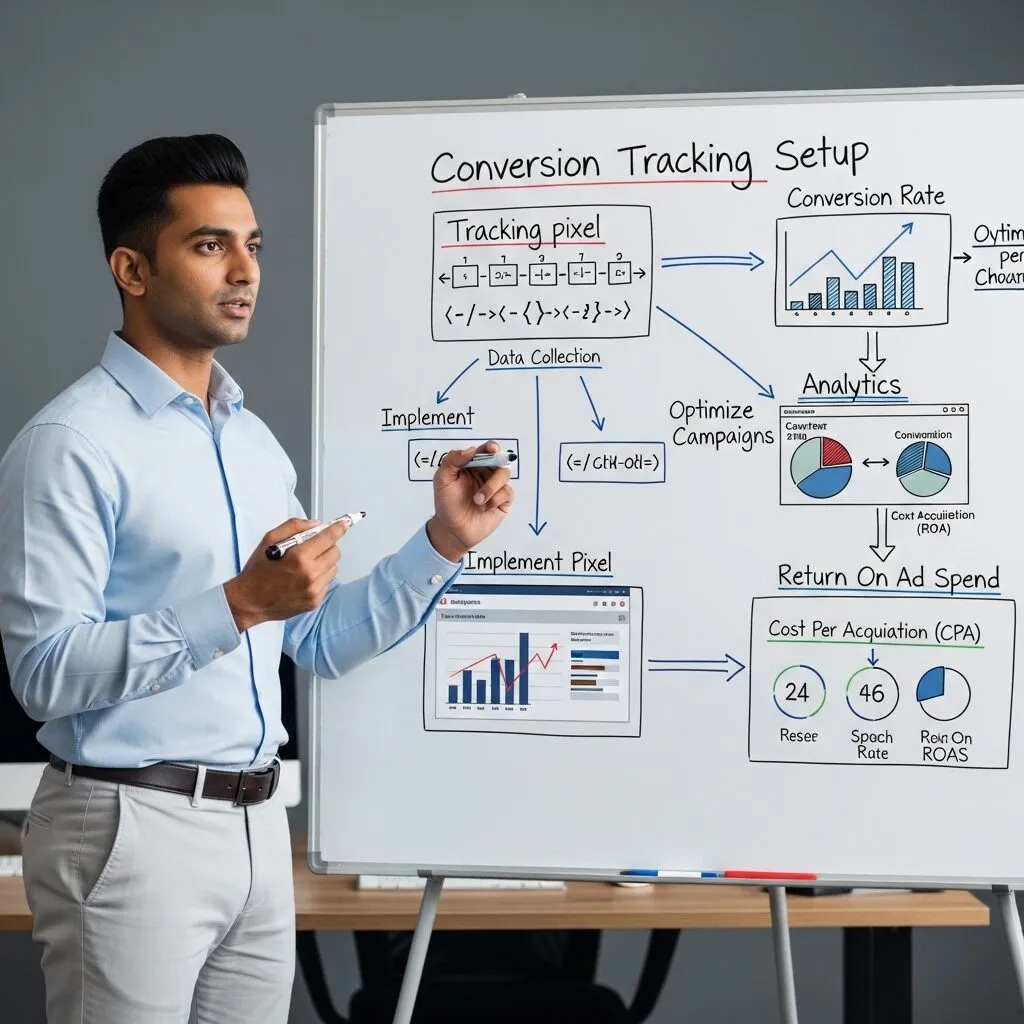
Conversion tracking measures which marketing actions lead to valuable business outcomes, such as purchases, leads, or sign-ups.

link

Measurable Results

By linking clicks and user interactions to measurable results, it enables data-driven decision-making and campaign optimization across digital channels and devices.

analytics

ROI Analysis

It provides accurate ROI analysis by identifying the specific interactions that result in conversions, ensuring marketing spend is allocated efficiently.

The Strategy Verdict

Successful growth requires data-driven decision-making. By linking every interaction to a business outcome, you enable accurate ROI analysis that powers optimization across all digital channels and devices.
Data Integrity Audit

Top 7 Reasons Conversion Tracking Fails

01

Misaligned goals

Tracking irrelevant actions produces misleading data that skews campaign optimization.

02

Incomplete tag installation

Loss of critical conversion records prevents accurate reporting and data-driven scaling.

03

Poor attribution

Misidentifies effective marketing channels, misguiding budget allocation and ROI analysis.

04

Incorrect conversion windows

Misrepresents campaign performance over time by failing to capture the true customer journey.

05

Absence of enhanced conversions

Reduces cross-device and privacy-limited measurement accuracy in a privacy-first world.

06

Misconfigured values

Skews ROI calculations and compromises bidding strategies by providing incorrect financial signals.

07

Lack of testing

Undetected technical failures create inconsistent data and reporting gaps that hinder growth.

Core Explanation / What Is Conversion Tracking?

Data-Driven Conversion Tracking

Conversion tracking is the systematic measurement of user actions that reflect business objectives. It typically involves: digital tags placed on websites, apps, or landing pages; event-based triggers capturing purchases, form submissions, or other conversions; and data aggregation into advertising or analytics platforms for reporting.

  • Core Logic: Digital tags placed on websites, apps, or landing pages provide the foundational signals for tracking performance.
  • Capture Methods: Event-based triggers capturing purchases, form submissions, or other conversions allow for granular action analysis.
  • Aggregation: Data aggregation into advertising or analytics platforms for reporting enables real-time strategy adjustment.

Key Metrics Include:

Conversions, Conversion rate (%), Cost per acquisition (CPA), and Value per conversion.

Measurement Intelligence
By implementing a systematic measurement framework, businesses can transform abstract interactions into concrete data points, providing a clear path to scaling ROI and optimizing acquisition costs.
Action Data Conversion ROI
Types of Keyword Intent Defined

Types of Keyword Intent Defined

Understanding search behavior is the foundation of aligning your bidding strategy with high-value actions.

  • 01
    Informational Users seek knowledge; may read content or download resources.
  • 02
    Commercial Investigation Users evaluate options; may engage with comparison tools or lead forms.
  • 03
    Transactional Users intend to purchase or subscribe; highest priority for ROI tracking.
  • 04
    Navigational Users look for a specific brand or website; low direct conversion impact.
Conversion Focus: Prioritize Transactional and Commercial Investigation intents to maintain a stable CPA during campaign expansion.
Technical Audit

How to Diagnose
Conversion Tracking Problems

A systematic framework for ensuring data integrity and measurement accuracy.

01

Audit Tag Implementation

Protocol

Verify all tags or GTM triggers are active and firing correctly across the site architecture.

The Goal: Eliminate "dark zones" where high-value user actions go unrecorded.
02

Check Attribution Settings

Alignment

Ensure models (last-click, data-driven) align with your specific campaign goals and sales cycle.

Impact: Prevents misallocation of budget to the wrong marketing channels.
03

Verify Conversion Windows

Timeframe

Match sales cycle realities (e.g., 30, 60, or 90 days) for accurate campaign measurement.

Result: Ensures credit is given to the ads that initiated long-term research paths.
04

Test Events

Validation

Use tag assistant tools across devices and browsers to confirm technical functionality.

Critical: Confirms the pixel bridge is stable before deploying automated bidding.
05

Analyze Data Discrepancies

Comparison

Compare analytics (GA4) with ad platforms to detect gaps and potential tracking leaks.

Insight: Helps identify cookie-blocking or cross-domain measurement errors.
06

Inspect Value Assignments

Financials

Ensure static or dynamic values reflect true business objectives and ROAS targets.

Bidding: Vital for value-based bidding (vBB) to optimize for revenue, not just volume.
07

Monitor Cross-Device Tracking

Advanced Signal

Validate enhanced conversions or hashed first-party data implementation to ensure measurement accuracy in a privacy-first world.

Scaling Tip: Enhanced signals are the primary driver for stabilizing CPA during aggressive budget expansion.

Common Mistakes and
Why Fixes Fail

Technical gaps and environmental constraints often undermine tracking accuracy:

  • Implementation failures: Duplicate or missing tags disrupt data collection and misguide bidding algorithms.
  • Edge cases: Offline conversions or external channels may not be captured digitally, leading to reporting gaps.
  • Limitations: Strict browser privacy settings reduce data fidelity even with enhanced conversions.

Funnel-Specific
Tracking Strategy

  • Awareness Stage: Focus on educational content to build user understanding; immediate transactions are unlikely.
  • Consideration Stage: Track engagement actions, such as downloads, demos, or form submissions, to measure emerging intent.
  • Decision Stage: Measure high-intent actions, including purchases and completed forms, ensuring accurate value attribution.
Data Integrity: Regular audits of your conversion bridge are essential to ensure your Decision Stage data is not being polluted by misconfigured top-of-funnel events.
Conversion Tracking Funnel Strategy and Common Implementation Gaps
Efficiency Analysis

Keyword Intent That Affects
Conversion Tracking Results

Mapping user psychology to performance benchmarks for ROI optimization.

Category
Benchmark / Typical Range
Notes
Informational
Traffic Profile High traffic, low conversion
Intent Observation

Users seek knowledge; immediate conversion unlikely

Commercial Investigation
Traffic Profile Moderate traffic, moderate conversion
Intent Observation

Users compare options; partial lead generation possible

Transactional
Traffic Profile Moderate-to-low traffic, high conversion
Intent Observation

Direct purchase intent; primary ROI target for e-commerce

Navigational
Traffic Profile Low traffic, negligible conversion
Intent Observation

Users search specific brands; minimal direct impact

Topic Architecture

Cluster Expansion:
Supporting Articles

Enhanced Conversions

Mechanisms, privacy compliance, and cross-device benefits for modern attribution.

Server-Side Tagging

Reducing browser limitations and preventing data loss through cloud-based collection.

Offline Conversion Import

CRM integration and effective GCLID usage to bridge the gap between clicks and sales.

Smart Bidding Optimization

Leveraging conversion data for highly automated and efficient bid strategies.

Attribution Models Explained

Comparing last-click, first-click, linear, and advanced data-driven approaches.

Conversion Value Assignment

Static vs dynamic allocation and the resulting impact on long-term ROI.

Cross-Device Tracking

Navigating challenges in mobile, desktop, and multi-platform user journeys.

E-Commerce vs Lead Gen

Differentiating metrics, benchmarks, and specific analytical strategies for each model.

Keyword Intent Analysis

The effects of informational, transactional, and commercial intent on conversion rates.

Troubleshooting Frameworks

Stepwise technical guides designed specifically for SMEs to detect tracking gaps.

Privacy-First Tracking

Ensuring compliance through consent mode and first-party data considerations.

ROI Analytics Optimization

Linking conversions to business performance and systematic budget allocation.

Conversion Tracking Insights
Knowledge Base Tracking FAQ
Expert Insights

Frequently Asked Questions

Navigate the complexities of measurement and attribution with these data-backed expert answers:

01

What is the most effective attribution model for small businesses?

Data-driven attribution distributes credit across all touchpoints for more accurate insights. Last-click may be simpler for short sales cycles or low-volume campaigns.

02

How often should conversion tracking be audited?

Conduct monthly audits for technical accuracy, with additional reviews after site updates, platform changes, or new campaigns.

03

Can offline sales be tracked in digital campaigns?

Yes, using click IDs (e.g., GCLIDs) imported from CRM systems. Accuracy depends on data matching and proper integration.

04

Why do conversion values differ across platforms?

Differences arise from event mapping, attribution windows, and reporting intervals across analytics and ad platforms.

05

Are enhanced conversions necessary?

They improve cross-device and privacy-restricted measurement accuracy but require compliant first-party data collection.

Final Verdict
Conversion tracking connects marketing actions to measurable business outcomes. Systematic implementation, regular audits, and strategic attribution enable accurate insights.

Transform Data into
Measurable Growth.

Conversion tracking connects marketing actions to measurable business outcomes. Systematic implementation, regular audits, and strategic attribution enable accurate insights, support automated bidding, and optimize campaigns. Awareness of limitations, user intent, and platform nuances ensures reliable decision-making across digital marketing channels.

Systematic Audits
Strategic Attribution
Automated Bidding
Intent Awareness