Business owners in Mysore and Bangalore often face a critical choice: should they hire a professional SEO agency, or attempt DIY SEO? This decision affects budgets, timelines, and how quickly your business gains visibility online. In our work at Aspire Digital Solutions with Mysore and Bangalore-based businesses, we often see owners struggling to balance cost with results. This blog is for small and medium business owners who want a clear, practical understanding of how SEO strategies perform in the real world and what to expect when choosing between DIY or agency-managed SEO.
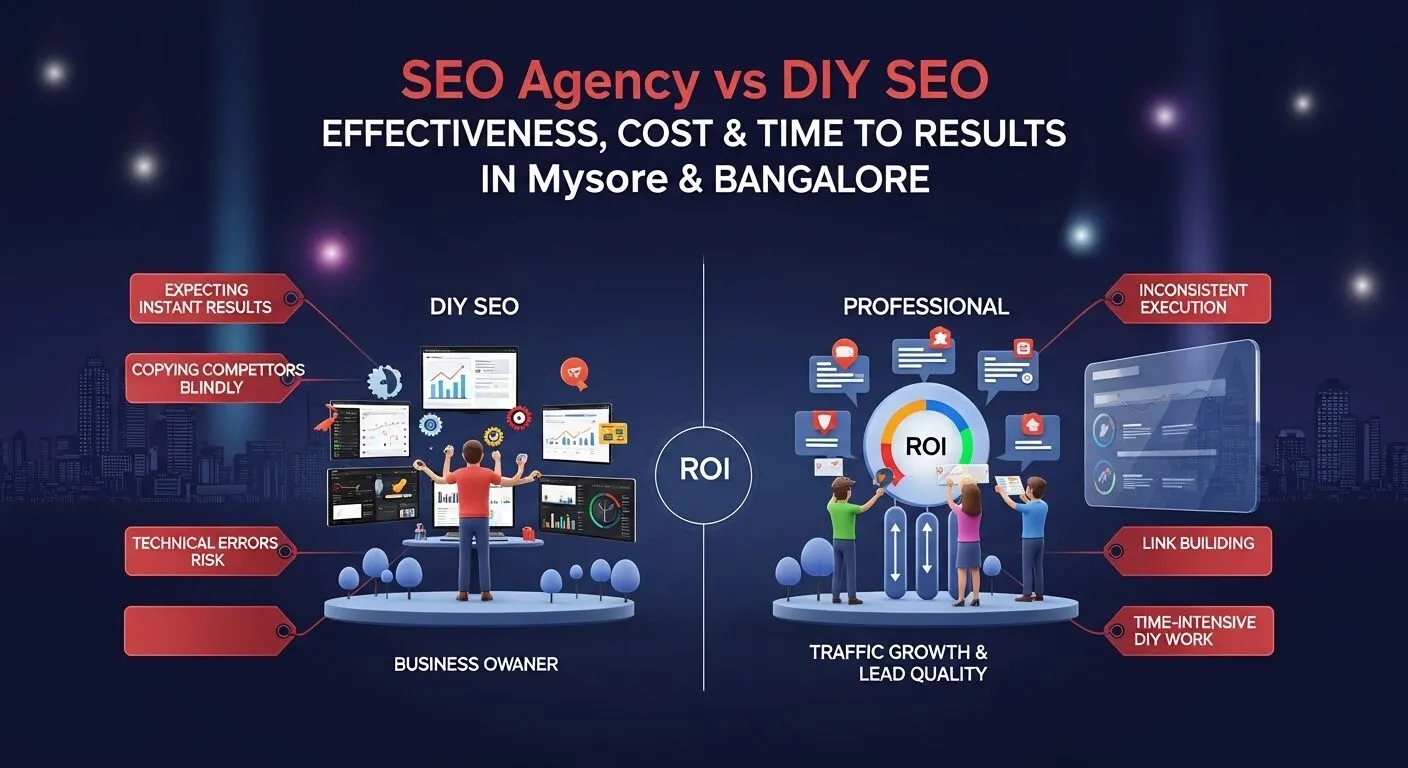
The term SEO Agency vs DIY SEO refers to two approaches to improving your website’s visibility on search engines.
A professional team manages everything from keyword research, technical audits, content optimization, link building, and ongoing monitoring.
The business handles SEO in-house using tools, guides, and occasionally freelancers, without professional oversight.
In practice, hiring an agency provides expertise and consistent execution, while DIY SEO can save money but demands significant time, technical skills, and consistent effort. For businesses seeking structured growth, investing in SEO Services in Mysore ensures strategic keyword planning, technical optimization, and long-term visibility. For companies in Mysore and Bangalore, the choice directly impacts lead generation and competitiveness in local search markets.
Local competition in these cities is increasing across sectors like IT services, hospitality, retail, and startups.
We often see businesses in Bangalore attempting DIY SEO without understanding local search trends. This often leads to wasted time and minimal results, especially for service-based businesses competing in dense markets. Partnering with a professional team offering SEO Services in Bangalore helps businesses align strategy with search intent, local competition, and sustainable growth goals.
| Factor | DIY SEO | SEO Agency |
|---|---|---|
| Cost | Lower upfront; mainly tools & time | Monthly retainers; higher upfront |
| Time | Very time-intensive | Saves business owner’s time |
| Expertise | Limited to knowledge acquired | Full team of specialists |
| Speed of Results | Slow, depends on learning curve | Faster, structured execution |
| Local Search Optimization | Requires learning local trends | Experienced in local markets like Mysore & Bangalore |
| Risk of Errors | Higher (technical & algorithm mistakes) | Lower; agencies prevent common mistakes |
| Flexibility | Full control; can pivot quickly | Agency handles implementation; strategic input may take time |
Trade-off: Agencies offer faster, more reliable results, while DIY is suitable for businesses with small budgets and time to invest in learning.
| Timeline | What to Expect |
|---|---|
| 30 Days | Minimal ranking changes; technical fixes and content updates start taking effect. |
| 60 Days | Low-competition keywords show gradual improvement; indexing issues resolved. |
| 90 Days | Noticeable traffic growth; improved lead quality; high-competition keywords may still require more time. |
Results depend on competition, algorithm changes, and content quality. Exact outcomes cannot be guaranteed. To better understand realistic expectations, read Why SEO Takes Time: Real Timelines for Indian Businesses.
Mysore Service Business: Applied agency-managed SEO; lead quality improved within 2 months even though total traffic growth was moderate. Focused local keywords made a difference.
Bangalore E-Commerce Startup: Attempted DIY SEO; faced delays due to technical issues and inconsistent content. After switching to an agency, traffic stabilized in 3 months and leads improved by 45% within 6 months.
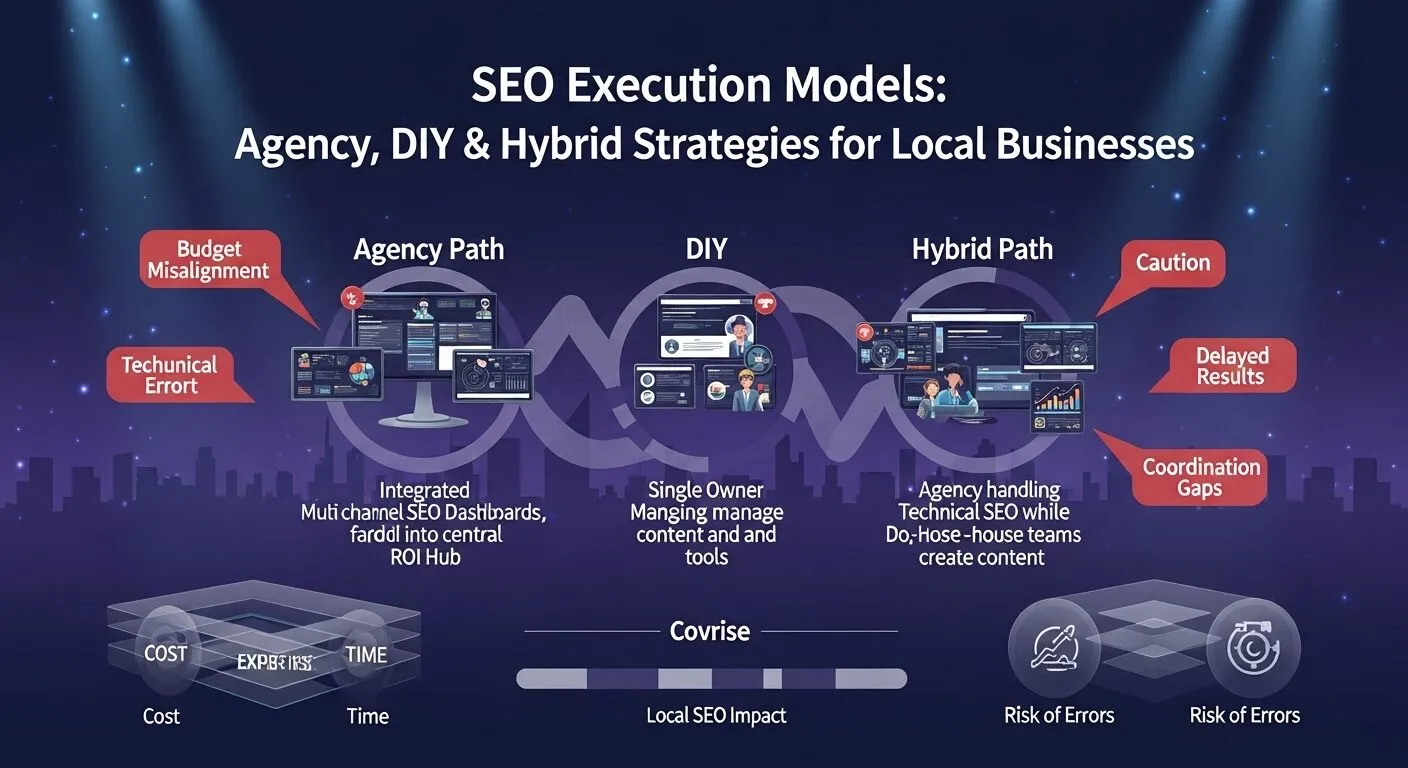
Many small and medium businesses benefit from a hybrid strategy:
This approach reduces costs while maintaining quality and expertise where it matters most.
Agencies: ₹15,000–₹35,000/month for small businesses; ₹50,000+ for competitive niches. DIY: Mainly tool subscriptions and staff time.
Yes. DIY works for low-competition niches; agencies provide faster and more reliable results for competitive markets.
30–60 days: small improvements. 3–6 months: meaningful traffic and lead growth.
Yes, but requires consistent effort, technical skill, and analytics understanding.
Not always, but agencies reduce errors, save time, and bring proven strategies for faster results.
Agencies usually outperform DIY due to experience with local keywords, competitive research, and structured strategies.