Share your details, and our experts will map out a custom strategy.
check
Request Received!
We've successfully logged your details. Our CRM team will reach out to you shortly.
Social Media Strategy
Organic Social Media vs Influencer Marketing: Which Delivers Better Results?
Businesses in Mysore and Bangalore face a common challenge: deciding where to invest their marketing resources for maximum online visibility and engagement. One question we hear often is: “Organic Social Media vs Influencer Marketing: Which Works Better?”
In our work at
Aspire Digital Solutions
, with Mysore and Bangalore-based businesses, we frequently see confusion between these two strategies.
Owners want measurable results, but each approach has unique strengths, limitations, and ideal use cases.
This blog is for small to medium business owners, marketing managers, and startup founders looking to make informed, practical decisions in the digital space.
Understanding these strategies now is critical. Social media consumption in India has grown sharply, competition in local markets is increasing, and consumers trust authentic content and credible endorsements over generic brand messaging.
What Organic Social Media vs Influencer Marketing Means in a Business Context
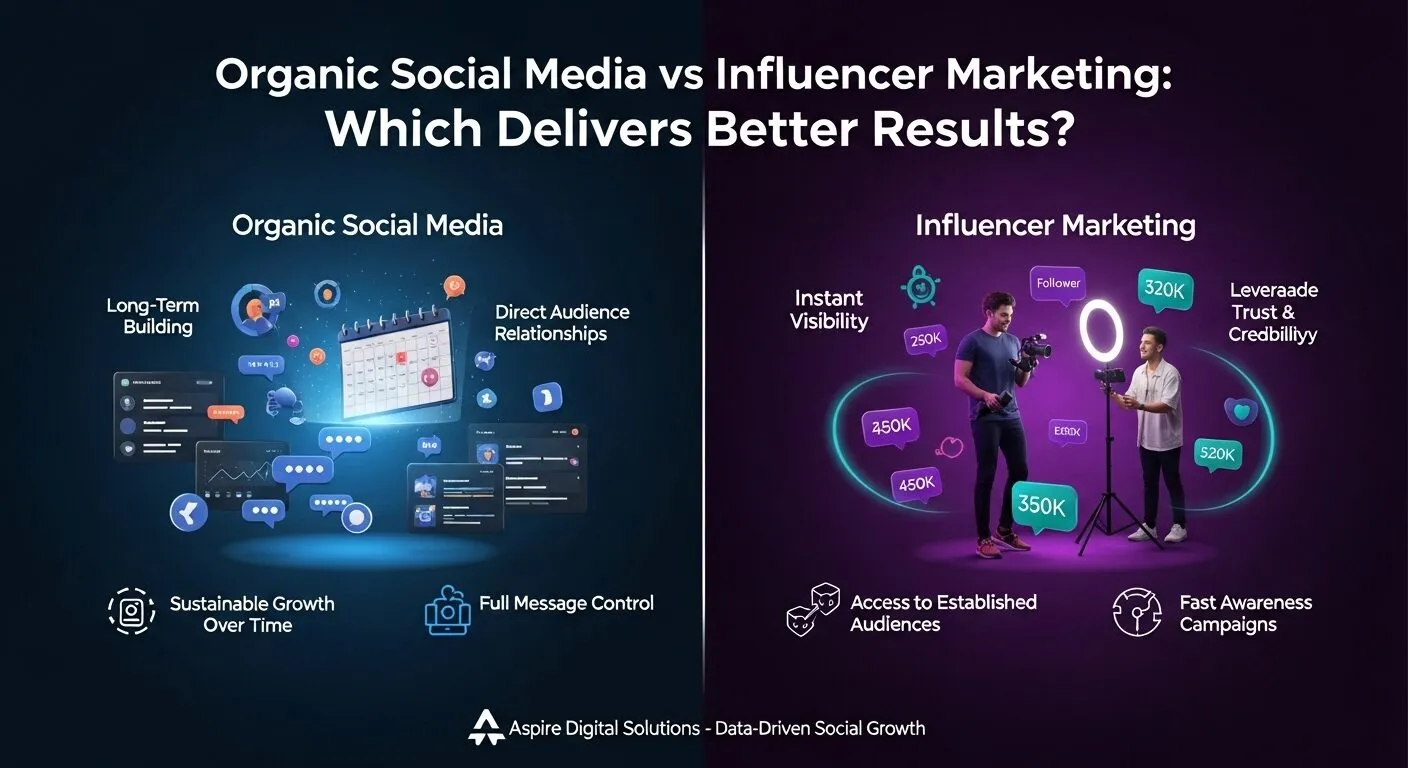
Organic Social Media involves posting content on platforms like Instagram, Facebook, LinkedIn, or X (Twitter) without paid promotion. Success depends on quality content, consistency, audience engagement, and algorithmic visibility.
Influencer Marketing involves partnering with individuals who have established social followings to promote products or services. Influencers range from micro-influencers (5K–50K followers) to macro-influencers (100K+ followers) and are compensated monetarily, via products, or performance-based incentives.
Organic social media builds a long-term, direct relationship with your audience.
Influencer marketing leverages someone else’s credibility and network for faster reach.
We often see Bangalore-based startups assume influencer marketing is a shortcut to sales. While it can generate visibility quickly, results depend heavily on the influencer’s relevance, authenticity, and audience alignment.
Why Businesses in Mysore and Bangalore Care About This Topic
Competitive Markets – Bangalore has thousands of SMBs in IT, health, retail, and food sectors. Mysore is growing rapidly in education, tourism, and manufacturing. Standing out online is challenging.
Consumer Behavior – Local audiences increasingly rely on social proof. Engaging social media posts or endorsements from credible local influencers can sway purchasing decisions.
Budget Sensitivity – Many SMBs cannot afford large-scale campaigns. Understanding ROI potential for each strategy is crucial.
Industry Relevance – Service-based businesses (education, health, events) benefit more from influencer marketing to build trust, while product-based businesses (retail, FMCG, electronics) often see consistent results with regular organic posting.
Regional Nuances – Festivals, cultural trends, and language preferences affect engagement. Both organic and influencer campaigns must align with local preferences to succeed.
Common Mistakes or Misunderstandings
Expecting Overnight Results: Both strategies take time. Organic growth builds relationships slowly; influencer posts may spike visibility but don’t guarantee sales.
Budget Misuse: Paying top-tier influencers without alignment or posting organic content inconsistently often wastes money.
Copying Competitors Blindly: Bangalore IT campaigns may not work for a Mysore-based retail business. Context matters more than trend-following.
How This Works in Practice
Organic Social Media Workflow
1. Audience Research: Identify local demographics, peak activity times, and content preferences.
2. Content Creation: Use posts, reels, stories, and infographics showcasing your products or services.
3. Engagement: Reply to comments and messages; create conversations.
4. Monitoring and Analytics: Track reach, impressions, and engagement rates to refine strategy.
Influencer Marketing Workflow
1. Identify Influencers: Micro-influencers (5K–50K) or macro-influencers (100K+) depending on budget and objectives.
2. Evaluate Fit: Look at engagement rate (Indian micro-influencers average 4–6%), audience demographics, and content style.
3. Negotiate Terms: Decide on fees, product exchanges, or commission-based payments.
4. Campaign Execution: Influencers create posts, stories, or videos promoting your brand.
5. Measure Outcomes: Track website traffic, leads, conversions, and social engagement.
Dependencies and Limits: Organic growth is slow but sustainable, making it ideal for brands investing in
Social Media Marketing Services in Mysore.
Influencer campaigns are fast but highly dependent on influencer credibility. Both require consistent monitoring, iteration, and audience feedback.
Organic Social Media vs Influencer Marketing – Comparison Table
Aspect
Organic Social Media
Influencer Marketing
Reach
Gradual, grows over time
Immediate access to influencer’s followers
Trust
Built via direct interaction
Leveraged via influencer credibility
Cost
Low; mainly content creation & management
Medium to high; depends on influencer size & engagement
Control
Full control over messaging
Influencer shapes content in their style
Timeframe
2–3 months for measurable engagement
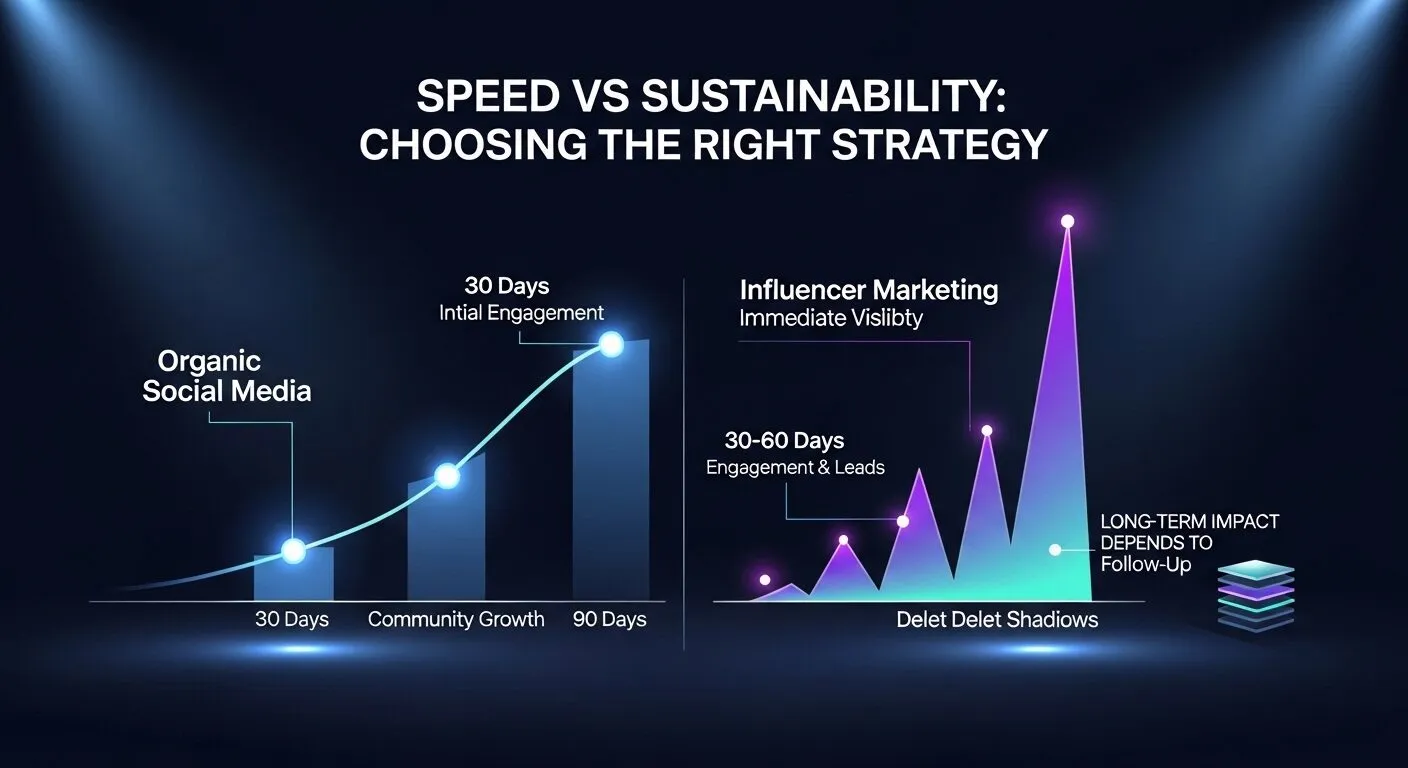
Weeks for visibility, but sustained impact depends on follow-up
Best Use Case
Long-term brand building, community engagement
Product launches, fast awareness, credibility-building
Limitations
Slow growth, algorithm-dependent
Results vary, high reliance on influencer choice
Benefits for Small and Medium Businesses
Organic Social Media
Cost-effective; mainly time and content production.
Builds brand credibility through direct audience engagement.
Provides insights on audience interests and behaviors.
Influencer Marketing
Provides fast reach to targeted audiences.
Leverages trust for quicker engagement.
Supplies fresh, authentic content from the influencer’s perspective.
In practice, combining both approaches delivers strong outcomes: organic content sustains your presence, while influencer campaigns drive spikes in visibility—especially for brands investing in
Social Media Marketing Services in Bangalore.
Timeframes and Results
Organic Social Media
30 days: Initial follower growth and engagement.
60 days: Community building and improved post reach.
90 days: Noticeable brand awareness and lead generation.
90 days: Long-term impact depends on content follow-up and consistency.
Note: Algorithm changes, audience shifts, or seasonal trends can affect results.
Local Examples or Scenarios
A Mysore boutique collaborating with a micro-influencer (10K followers) saw a 35% increase in foot traffic in two months. Organic posts maintained a steady brand presence.
A Bangalore IT startup used LinkedIn organic content to engage B2B decision-makers. Leads increased by 25% over three months, while influencer collaborations supported a new service launch.
High-cost influencer campaigns can drain resources.
Short-term Goals Only
Expecting instant sales from organic posts is unrealistic.
Business Type Mismatch
Very niche B2B services may not see value from influencer marketing.
Inconsistent Execution
Irregular posting or unmonitored influencer campaigns often fail.
Pro Tips for Bangalore & Mysore SMBs
Start Small: Test campaigns with micro-influencers first.
Repurpose Content: Share influencer posts on your own channels.
Track Metrics: Use platform analytics to measure reach, CTR, and engagement.
Blend Strategies: Combine organic posting for credibility with influencer campaigns for visibility.
Align Timing: Launch campaigns around local festivals, events, or seasonal trends for higher engagement.
Frequently Asked Questions
1. How much does this cost in Mysore and Bangalore?
Organic social media: ₹5,000–₹20,000 per month (content creation & management). Influencer campaigns: ₹5,000–₹2,00,000 depending on influencer type and campaign scope.
2. Is this suitable for small businesses?
Yes. Organic social media is affordable, while influencer marketing can be scaled using micro-influencers.
3. How long before results are visible?
Organic social media: 2–3 months for engagement. Influencer campaigns: Weeks for visibility; long-term impact depends on follow-up.
4. Can this be handled in-house?
Yes, if your team has content skills and social media knowledge. Otherwise, professional guidance is recommended.
5. Is professional support required?
Professional support helps select the right influencers, optimize organic growth, and avoid wasted budget. Local agencies understand the Bangalore/Mysore market nuances.
Mohammed Rehan is an SEO & Digital Marketing Strategist with hands-on experience helping service-based businesses generate consistent leads through organic search, Google Ads, and conversion-focused marketing strategies. He specializes in local SEO, website optimization, and performance-driven digital growth.