
trending_up

...

...

ads_click

...

...

Premium Agency

Premium Services Why Paid Ads Fail for Small Businesses

We help businesses scale with data-driven strategies and world-class design.

Get Started rocket_launch
check

Request Received!

We've successfully logged your details. Our CRM team will reach out to you shortly.

Campaign Audit

Conversion Diagnosis

Paid ads often fail for small businesses when targeting, creatives, landing pages, or tracking are misaligned. Even campaigns generating clicks underperform if audiences are unqualified or messaging doesn't match intent.

ads_click

Intent Mismatch

High click volume without conversions usually signals that ad messaging is attracting unqualified traffic or the landing page isn't answering the user's search intent.

monitoring

Tracking Gaps

Budget mismanagement often stems from broken conversion tracking. Without proper data, agencies cannot optimize bids or scale the high-performing segments of your campaign.

The Strategy Verdict

Success requires structured testing and iterative scaling. By aligning your budget with precise audience targeting and data-backed creatives, we turn wasted ad spend into high-quality lead generation.
Campaign Performance Audit

Top 7 Reasons Google Ads Do Not Convert

01

Poor Audience Targeting

Ads reach uninterested users who are not looking for your service, significantly reducing engagement levels.

02

Misaligned Ad or Offer

Messaging fails to meet the specific audience needs or expectations, leading to low conversion rates.

03

Weak Landing Pages

Slow-loading, unclear, or generic pages discourage users from taking the final action.

04

Focus on Clicks Over Revenue

Ignoring revenue tracking gives false performance signals, optimizing for volume instead of profit.

05

Budget Mismanagement

Overspending on broad or expensive keywords without filtering drains the ROI potential of the campaign.

06

Lack of Structured Testing

Inefficient optimization and lack of A/B testing lead to persistent campaign underperformance.

07

Missing Conversion Tracking

Failing to measure which specific ads generate leads makes data-driven scaling impossible.

Performance Audit / Defining Ads Failure

Diagnosing Paid Ads Failure

Paid ads fail when ad spend does not generate meaningful leads, conversions, or revenue. Identifying the technical and strategic gaps is the first step toward recovery.

  • Poor Targeting: Ads reach uninterested users, draining budget on clicks with zero purchase intent.
  • Misaligned Offers: Messaging fails to appeal to potential buyers, resulting in low engagement rates.
  • Weak Tracking: Absence of measurable outcomes wastes budget on underperforming segments.

Strategic Insight:

A click-focused strategy is often a false signal. High click volume does not guarantee revenue if the underlying conversion funnel is broken.

Revenue Leak Detection
Successful campaigns prioritize Return on Ad Spend (ROAS) over total traffic. We audit your campaign to find where high-quality leads are being lost.
ROI Audit Failure Analysis
How Paid Ads Work in Practice

How Paid Ads Work In Practice

Professional ad management follows a structured 3-step cycle to transform budget into measurable business growth.

  • 01
    Inputs Required Defining target demographics, aligning budgets with business goals, and preparing optimized landing pages with high-quality creative assets.
  • 02
    Setup & Monitoring Platforms are configured with precise geographic targeting. We monitor daily in week one, optimizing bids and negative keywords to prune waste.
  • 03
    Expected Outputs Initial clicks appear within days, while qualified leads typically stabilize within 2–4 weeks as data builds for refinement and ROI improvement.
Limit Disclaimer: Paid ads do not guarantee sales. Final performance depends on your market fit, local competition, and the relevance of your offer to the Mysore audience.
Search Psychology

Keyword Intent &
Conversion Probability

Mapping user search behavior to your advertising funnel for optimized ROAS.

01

Informational Intent

Search Context
  • Goal: User is seeking knowledge or general answers.
  • Probability: Lowest conversion likelihood.
The Strategy: Focus on brand awareness and SEO-driven content. Avoid high-bid PPC on these terms to prevent budget waste.
02

Commercial Investigation

Search Context
  • Goal: User is comparing specific options or brands.
  • Probability: Medium conversion potential.
The Strategy: Use comparison landing pages, reviews, and case studies to influence their decision-making process.
03

Transactional Intent

Search Context
  • Goal: User is ready to purchase or sign up immediately.
  • Probability: Highest conversion potential.
The Strategy: Bid aggressively. Ensure the checkout or lead form is frictionless to capture the "buy now" intent.
04

Navigational Intent

Search Context
  • Goal: User seeks a specific website or brand location.
  • Probability: High conversion if the brand matches.
The Strategy: Use Brand protection ads. Ensure your site appears first to prevent competitors from stealing high-intent traffic.

Identifying Critical Ad Mistakes

Many businesses in Mysore struggle with PPC performance because of common strategic oversights. Avoiding these six mistakes is essential for protecting your ROI:

  • Unrealistic Expectations: Expecting immediate sales without a testing phase leads to wasted spend and premature campaign cancellations.
  • Budget Misuse: Allocating capital to broad or irrelevant keywords reduces traffic quality and drains your available daily budget.
  • Poor Creative Execution: Using generic copy or visuals that don't align with landing pages significantly decreases user engagement.
  • Blind Competitor Copying: Mimicking competitors without understanding your unique Mysore market fit is rarely an effective long-term strategy.
  • Ignoring Tracking & Analytics: Without clean conversion tracking, identifying revenue-generating ads becomes impossible.
  • Lack of Hyper-Targeting: Broad geographic settings inflate costs while reducing the local relevance of your lead generation.
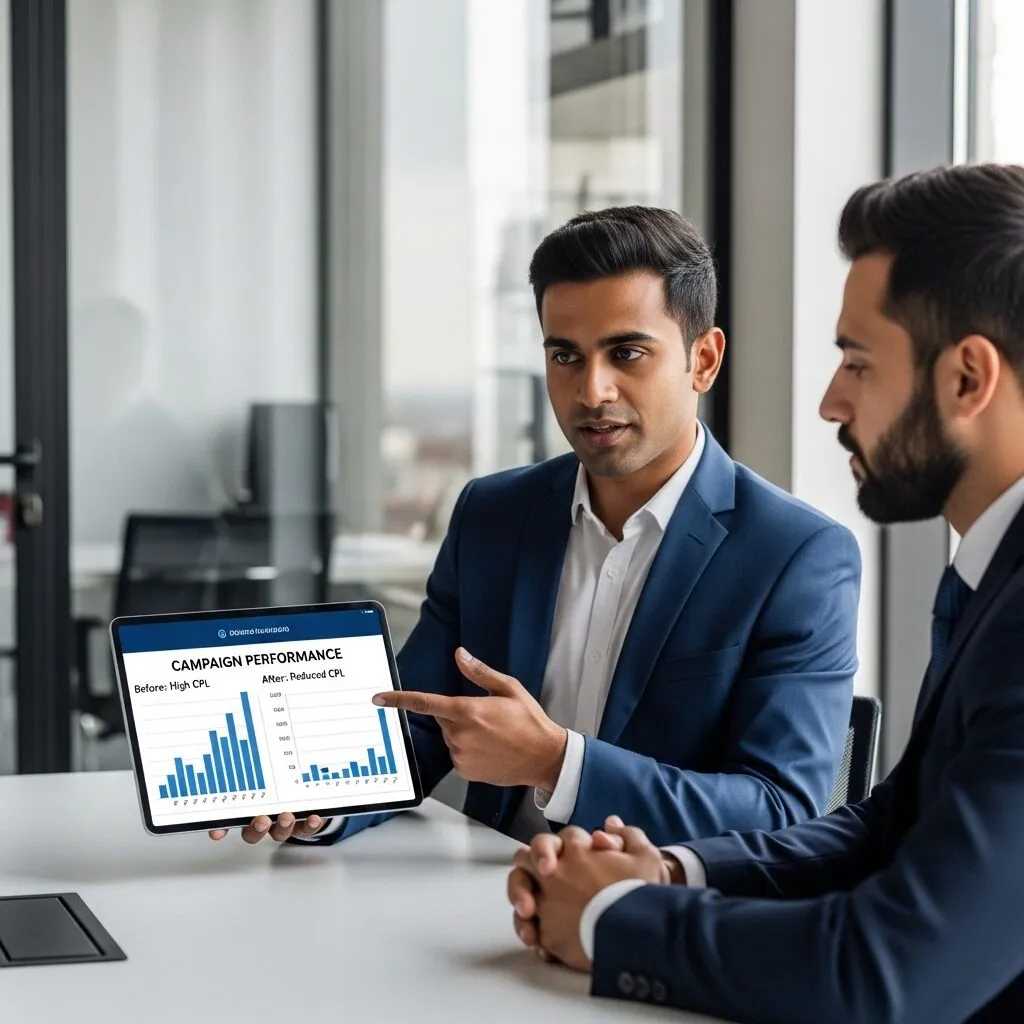
Optimization Rule: Sustainable performance requires shifting from "volume" to "precision." Stopping budget leaks through accurate data tracking ensures your marketing works harder for your business.
Google Ads Common Mistakes Diagnosis
Conversion Intelligence

Industry Conversion
Rate Benchmarks

Analyze how your campaign performance compares to global and Mysore-specific vertical standards in 2026.

E-commerce
Typical Rate / 1% – 3%
Competitive pricing & checkout friction influence rates
i
Professional Services
Typical Rate / 3% – 5%
Sales cycles vary significantly by service type
i
Education & Training
Typical Rate / 2% – 6%
Highly dependent on trust and offer clarity
i
Health & Wellness
Typical Rate / 2% – 4%
Driven by clinic location and local reputation
i
Local Services
Typical Rate / 5% – 10%
High intent searches from repeat local customers
i

Note: Actual conversion rates fluctuate based on campaign quality, audience precision, and Mysore market competition.

Google Ads Campaign Audit Diagnostic
Audit Protocol Conversion Leak Recovery
Diagnosis Phase

Analyzing Your Conversion Funnel

If your campaign is generating traffic but failing to produce ROI, follow this clinical diagnostic framework to identify the disconnect:

01

Audience & Location Audit

Review targeting precision and location settings to ensure ads are reaching users with high local relevance.

02

Keyword Intent Classification

Classify search terms as informational, transactional, or navigational to ensure your budget isn't wasted on curiosity clicks.

03

Creative & Offer Alignment

Evaluate ad copy and visuals for consistency with your primary offer to ensure expectations match reality.

04

Landing Page UX & CTA

Check page speed, content clarity, and Call-To-Action effectiveness. The destination must be conversion-ready.

05

Analytics & Tracking Verification

Confirm conversion tracking is setup correctly. Without clean data, campaign optimization is impossible.

06

Budget Allocation Assessment

Analyze how spend is distributed across keywords. Shift budget from high-cost, low-return terms to top performers.

07

Structured A/B Testing

Run isolated experiments on headlines and landing pages to identify which variables drive the highest engagement.

08

Iterative Scaling

Continuously pause underperforming ads and scale the successful segments based on historical performance data.

Campaign optimization is a continuous loop. Systematic diagnosis ensures your Mysore business stays ahead of market competition.

Scalable Growth

Empowering SMBs with
Performance Marketing

Immediate Visibility

Bypass the long wait for organic growth. Your ads appear instantly where your Mysore customers are searching.

Targeted Reach

Precisely filter audiences by location, specific demographics, and device types to ensure zero budget waste.

Data-Driven Decisions

Real-time analytics provide deep insights to refine messaging, creative assets, and funnel optimization.

Scalability

Whether you're a startup or a growing brand, budgets can be adjusted seamlessly based on proven ROI.

The 90-Day ROI Roadmap

Day 01 – 30
The Discovery Phase

Collecting vital impressions, high-intent clicks, and early lead data to set performance benchmarks.

Day 31 – 60
The Refinement Phase

Optimizing ad copy and targeting precision. Initial ROI insights emerge as the algorithm stabilizes.

Day 61 – 90
The Dominance Phase

Performance stabilizes; winning keywords and audiences are identified for aggressive scaling.

Optimization Protocol

Conversion
Success Matrix

01 / MONITOR

Vigilant Oversight

Daily campaign auditing ensures foundational stability, particularly during the high-stakes first week.

02 / TARGET

Hyper-Local Precision

Eliminate broad budget leaks by focusing strictly on long-tail intent and Mysore-specific geographic terms.

03 / ALIGN

Message Sychronicity

Zero friction between ad copy and landing page content to maximize Quality Score and engagement.

04 / TRACK

Multi-Point Attribution

Mapping every call, form, and download to specific keywords to identify true revenue drivers.

05 / OPTIMIZE

Continuous Iteration

Rigorous A/B testing of creatives while pruning underperforming assets in real-time.

06 / POLISH

Mobile UX Mastery

Ensuring site speed and mobile usability are optimized to convert high-intent mobile searchers.

Strategic Risk Factors
Budget Deficiency

Campaigns with budgets below Mysore market thresholds fail to generate the data density required for algorithm learning.

Velocity Mismatch

High-value services with long sales cycles are often incompatible with short-term conversion expectations.

Immediate ROI Bias

Expecting instant profitability without a testing phase leads to premature withdrawal and strategic failure.

Ecosystem Expansion

Strategic Ecosystem
& Supporting Architecture

Multi-Channel Attribution Models

Advanced tracking to determine the true value of every customer touchpoint across social and search.

Conversion Rate Optimization (CRO)

frameworks designed to turn high-intent traffic into measurable revenue through behavioral psychology.

CRM Integration & Ad Tracking

Seamlessly bridge the gap between ad clicks and final sales data for perfect ROI transparency.

Hyper-Local Targeting Strategies

Precision-engineered location settings to dominate the Mysore market and local service areas.

Landing Page Speed & UX

Minimizing friction and load times to maximize mobile conversion rates and Quality Scores.

Video & Interactive Performance

Leveraging rich media and motion to capture attention and drive higher engagement rates.

Retargeting Architecture

Customized re-engagement funnels designed to bring back previous visitors and close sales.

Keyword Intent Analysis

Deep-dive research into search psychology to identify high-ROI transactional terms.

Offline Conversion Tracking

Integrating in-store visits and phone calls into digital dashboards for a holistic view of performance.

A/B Testing Frameworks

Rigorous, data-backed experimentation to identify the winning combination of copy and visuals.

Paid Ads Performance FAQ
Knowledge Base Strategy & Execution FAQ
Expert Insights

Frequently Asked Questions

Navigate the complexities of paid search and social advertising with these data-backed answers on budgeting and performance:

01

How much should I spend initially?

Small businesses can start with $150–$400 monthly for initial testing. Once data reveals high-performing segments, budgets should be scaled accordingly.

02

How soon will I see results?

Initial clicks appear within days, while qualified leads typically stabilize in 2–4 weeks. A stable, predictable ROI is usually visible within 60–90 days.

03

Can I manage this in-house?

Yes, but high-level expertise in conversion tracking and audience targeting is required. Professional management often saves more in "wasted spend" than it costs in fees.

04

Do I need dedicated landing pages?

Absolutely. Pages aligned specifically with your ad messaging increase conversion rates and drastically reduce bounce rates compared to a standard home page.

05

How critical is conversion tracking?

It is essential. Without tracking, you cannot identify which keywords generate revenue, making it impossible for the Google algorithm to optimize for ROI.

Typical CPC for small businesses averages $0.20–$0.60 on Google and $0.05–$0.30 for Meta engagement, depending on your Mysore niche and competition.

The Strategy Roadmap
Paid ads fail when targeting, creatives, and budgets are misaligned. Success for small businesses requires disciplined scaling and high-intent keyword alignment.

Transform Wasted Spend into
Measurable Growth.

Achieve predictable ROI by combining structured testing with precise conversion tracking. We help Mysore businesses navigate iterative analysis and disciplined scaling to maximize campaign performance and long-term revenue.

Structured Testing
Keyword Intent Audit
Conversion Mapping
Iterative Scaling