
How to Write Content That Ranks
To write content that ranks, choose a topic people search for, match the search intent, answer the main question early, cover the topic fully, add original insight, structure the page clearly, use keywords naturally, support claims with evidence, add internal links, optimize technical elements, and update the page when information changes.
For businesses looking to implement this system professionally, Aspire Digital Solutions provides structured SEO content execution tailored to Indian markets.
What Is Ranking Content?
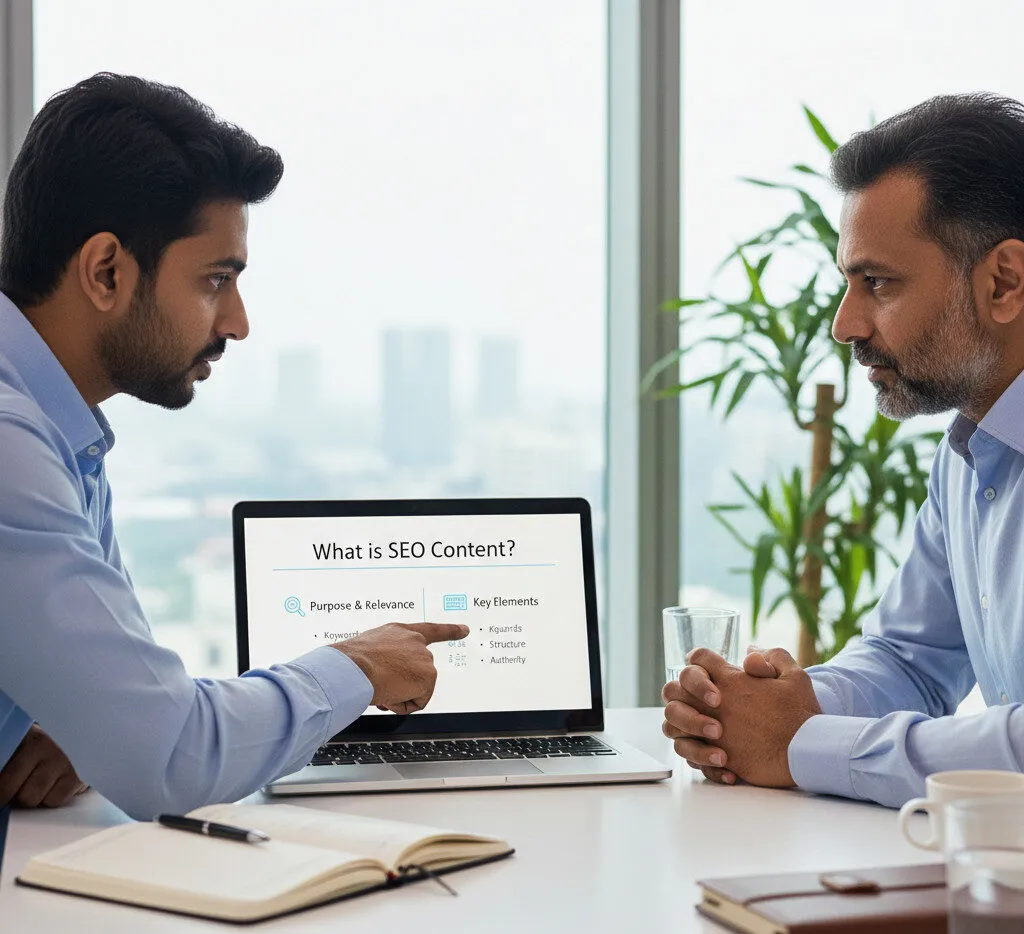
Ranking content is content that search engines can understand and users find useful enough to click, read, share, save, link to, or act on.
It can be:
- A blog post
- A service page
- A product page
- A category page
- A comparison page
- A guide
- A checklist
- A case study
- A local city page
- A tool or calculator
Content ranks when it satisfies a real search need better than competing pages.
Writing content that ranks is not the same as adding keywords to an article. It is the process of creating the best useful answer for a specific search intent.
Why Most SEO Content Does Not Rank
Most content fails because it is written before the writer understands the search.
Common reasons include:
- Wrong keyword choice
- Weak search intent match
- Generic introduction
- Thin explanations
- Repeated points
- No expert input
- No original examples
- Poor heading structure
- Missing internal links
- No clear next step
- Outdated information
- Poor readability
- Slow or weak page experience
- No topical authority
- No content refresh plan
Search engines do not need another copy of what already exists. Users do not need vague advice. Ranking content must be useful, specific, and structured.
The Ranking Content Model
Use this model:
Search Demand → Intent → Content Type → Information Gain → Structure → Optimization → Measurement → Refresh
| Stage | What It Means | Output |
|---|---|---|
| Search Demand | People search for the topic | Keyword list |
| Intent | You understand what they want | Search intent map |
| Content Type | You choose the right format | Blog, service page, guide, comparison |
| Information Gain | You add something competitors missed | Original value |
| Structure | You organize the answer clearly | Heading outline |
| Optimization | You improve SEO elements | Title, meta, links, schema |
| Measurement | You track performance | Search Console data |
| Refresh | You improve the page over time | Updated content |
This process prevents random writing.
Cause → Process → Outcome
Cause: A user searches because they need an answer, comparison, solution, product, or service.
Process: Google compares pages based on relevance, usefulness, clarity, quality, links, structure, and other signals.
Outcome: Content that best satisfies the search intent and provides useful information has a stronger chance of earning visibility, traffic, and conversions.
Ranking is the result of usefulness plus clarity plus trust.
Step 1: Choose a Topic With Search Demand
Start with a topic people actually search for.
A topic should pass three tests:
- Search demand: people look for it.
- Business value: it connects to your product, service, or audience.
- Ranking possibility: your site has a realistic chance to compete.
| Topic Type | Example | Best Use |
|---|---|---|
| Informational | how to write content that ranks | Blog guide |
| Commercial | best SEO content writing services | Comparison or service page |
| Transactional | hire SEO content writer | Landing page |
| Local | SEO content writer in Bangalore | Location page |
| Support | why my blog is not ranking | Troubleshooting guide |
| Product-led | content optimization software | Product page or feature page |
Do not choose topics only because they have high search volume. Choose topics that match your audience and your website's authority.
Step 2: Match Search Intent Before Writing
Search intent is the reason behind a search.
A page usually fails when its format does not match the user's intent.
| Search Query | Likely Intent | Best Content Format |
|---|---|---|
| what is SEO content | Learn definition | Short guide |
| how to write SEO content | Learn process | Step-by-step article |
| SEO content writing services | Hire provider | Service page |
| best content optimization tools | Compare options | List or comparison |
| SEO content checklist | Use practical tool | Checklist |
| blog not ranking | Solve problem | Diagnostic guide |
Before writing, search the target query and study the top results.
Check:
- Are top pages blogs, product pages, service pages, or videos?
- Are they beginner guides or advanced guides?
- Are they short answers or full guides?
- Do they include tables, examples, tools, or templates?
- What questions do they answer?
- What do they miss?
- What kind of page would be most useful?
The goal is not to copy the results. The goal is to understand what users expect.
Step 3: Find the Content Gap
A content gap is information that the user needs but competing pages do not explain well.
Look for missing:
- Definitions
- Examples
- Step-by-step process
- Comparison tables
- Original data
- Expert quotes
- Local context
- Visual explanations
- Common mistakes
- Edge cases
- Decision matrices
- Checklists
- Templates
- Troubleshooting guidance
- Business application
A content gap is your opportunity to create a better page.
Step 4: Add Information Gain
Information gain means adding useful value that is not already repeated across the top results.
Ways to add information gain:
- Share first-hand experience
- Add real examples
- Interview an expert
- Run a small survey
- Add screenshots from actual work
- Build a scoring system
- Create a decision matrix
- Compare methods clearly
- Explain failure scenarios
- Add local or industry-specific guidance
- Provide a checklist
- Add a process diagram
- Include before-after examples
- Show how to measure results
- Explain what not to do
Generic content says what everyone says.
Ranking content adds something worth quoting, saving, linking to, or acting on.
| Score | Meaning |
|---|---|
| 1/5 | Repeats common advice |
| 2/5 | Covers the basics but adds little |
| 3/5 | Adds examples and clearer structure |
| 4/5 | Adds original frameworks, expert input, or useful tools |
| 5/5 | Adds unique research, real data, strong examples, and practical decision support |
Step 5: Build the Content Outline
A strong outline makes content easier to read and easier for search systems to understand.
A good outline should include:
- H1 with the main topic
- Direct answer near the top
- Clear definitions
- Main steps or sections
- Related subtopics
- Examples
- Tables where useful
- Internal link points
- FAQs
- Summary
SEO Content Outline Template
Use this structure:
- H1: Main topic
- Direct answer
- Definition
- Why it matters
- Step-by-step process
- Examples
- Comparison table
- Checklist
- Common mistakes
- Edge cases
- Measurement
- FAQs
- Summary
The exact structure should change by topic, but the page should always answer the search clearly.
Step 6: Write the Direct Answer First
A strong SEO article should answer the main query early.
The direct answer should be:
- 40–60 words
- Clear
- Specific
- Easy to quote
- Free from filler
- Written in plain language
Example
Query: "How to write content that ranks?"
Strong answer:
"Write content that ranks by choosing a search-backed topic, matching intent, answering the main question early, covering related subtopics, adding original value, using clear headings, optimizing title and meta elements, linking to relevant pages, and refreshing the content based on performance data."
This helps users immediately and supports featured snippet extraction.
Step 7: Use Keywords Naturally
Keywords help search engines and users understand the page topic.
Use keywords in:
- Title tag
- H1
- First 100 words
- One or more H2s where natural
- URL slug
- Meta description
- Image alt text where relevant
- Internal link anchor text
- Body copy
- FAQ questions
Do not force exact-match keywords into every paragraph.
Modern SEO content should use natural language, related terms, synonyms, and entity coverage.
| Page Element | Recommendation |
|---|---|
| Title tag | Include main keyword near the start |
| H1 | Use the main topic clearly |
| URL | Keep short and descriptive |
| Introduction | Mention the topic naturally |
| H2 headings | Use related phrases where useful |
| Body copy | Use natural variations |
| Alt text | Describe the image accurately |
| Internal links | Use descriptive anchor text |
| Meta description | Include the topic and benefit |
| FAQs | Use real search questions |
Keyword use should improve clarity, not reduce readability.
Step 8: Write for Topic Coverage, Not Keyword Density
Keyword density is not a good writing goal.
A strong page covers the topic with enough depth to satisfy the user.
For example, a page about "how to write content that ranks" should cover:
- Search intent
- Keyword research
- Content structure
- Title tags
- Headings
- On-page SEO
- E-E-A-T
- Information gain
- Internal links
- Readability
- Featured snippets
- AI search
- Content updates
- Measurement
- Common mistakes
Covering the topic fully is better than repeating one keyword many times.
Step 9: Demonstrate Experience and Expertise
Content is more trustworthy when it shows real knowledge.
Add experience through:
- First-hand examples
- Screenshots
- Case studies
- Expert quotes
- Author bio
- Process notes
- Original observations
- Data from your work
- Tested methods
- Clear limitations
For serious topics such as finance, health, legal, education, or safety, content should be reviewed by qualified experts.
Experience is not decoration. It gives the reader a reason to trust the content.
Step 10: Make the Page Easy to Read
Ranking content should be easy to read on mobile and desktop.
Use:
- Short paragraphs
- Clear headings
- Simple sentences
- Bullet points
- Numbered steps
- Tables for comparison
- Bold text for important points
- Examples
- Visuals
- Table of contents for long guides
Avoid:
- Long text blocks
- Repeated introductions
- Unnecessary jargon
- Keyword stuffing
- Vague claims
- No examples
- No clear next step
Readable content keeps users engaged and helps them find answers faster.
Step 11: Add Internal Links
Internal links help users find related pages and help search engines understand page relationships.
Add internal links to:
- Related guides
- Service pages
- Product pages
- Category pages
- Case studies
- Tools
- Contact pages
- Location pages
- Glossary pages
- Supporting resources
| Source Section | Anchor Text | Target Page |
|---|---|---|
| Keyword research section | keyword research guide | Keyword research blog |
| Content update section | content audit service | Content audit page |
| SEO content section | SEO content writing services | Service page |
| Local content section | local SEO strategy | Local SEO guide |
| Measurement section | Google Search Console audit | Technical SEO page |
Internal links should be useful, not random.
Step 12: Add Rich Content Where It Improves Understanding

Rich content can make a page more useful.
Use:
- Screenshots
- Diagrams
- Charts
- Tables
- Videos
- Templates
- Infographics
- Calculators
- Checklists
- Process visuals
Do not add visuals only for decoration.
A good visual should explain something faster than text alone.
Step 13: Optimize Title Tag and Meta Description
The title tag helps searchers understand the page before clicking.
A good title tag should:
- Include the main keyword
- Explain the benefit
- Stay clear
- Match the content
- Avoid clickbait
| Weak Title | Stronger Title |
|---|---|
| SEO Tips | How to Write Content That Ranks |
| Content Writing Guide | SEO Content Writing: Process, Examples and Checklist |
| Best Blog Tips | How to Structure Blog Content for Google Rankings |
The meta description does not need to be stuffed with keywords. It should explain why the page is useful.
Meta Description Example
"Learn how to write content that ranks using search intent, keyword research, useful structure, information gain, E-E-A-T, internal links, optimization, and content refreshes."
Step 14: Use Structured Data Where Relevant
Structured data helps search engines understand page content and can support rich result eligibility when implemented correctly. Google states that structured data helps it understand content on a page and gather information about the web and the entities included in markup.
Useful structured data types include:
- Article
- FAQPage
- HowTo
- Product
- Review
- Recipe
- Course
- Organization
- BreadcrumbList
- LocalBusiness
Use structured data only when it accurately represents visible page content.
Step 15: Make Content Ready for AI Search
AI search systems prefer content that is easy to understand, extract, and verify.
Make content AI-ready by using:
- Clear definitions
- Direct answer blocks
- Descriptive headings
- Entity-rich explanations
- Short paragraphs
- Comparison tables
- Step-by-step processes
- FAQs
- Source notes
- Unique expert insight
Google's AI optimization guidance says foundational SEO practices still matter and recommends unique, expert-led content that provides value beyond common knowledge.
Do not write only for AI systems. Write for people first, then make the content clear enough for search and AI systems to parse.
Step 16: Add a Clear Conversion Path
Ranking without conversion is incomplete for business content.
Each page should have a next step.
Examples:
| Content Type | Best Next Step |
|---|---|
| Beginner guide | Related guide or newsletter signup |
| Service guide | Service page or consultation CTA |
| Product guide | Product category or comparison |
| Case study | Contact or demo request |
| Checklist | Download or audit offer |
| Local guide | Call, WhatsApp, or appointment |
| Ecommerce guide | Product category page |
| Tool page | Free trial or quote request |
Do not push the sale too early if the user is only learning. Match the CTA to the search intent.
Step 17: Measure Content Performance
Publishing is not the end.
Use Google Search Console and analytics tools to measure:
- Impressions
- Clicks
- Click-through rate
- Average position
- Ranking queries
- Organic traffic
- Engagement
- Conversions
- Leads
- Revenue
- Internal link clicks
- Assisted conversions
Content that ranks should be measured by both search performance and business value.
Step 18: Refresh Content Regularly
Content can lose rankings when it becomes outdated, incomplete, or less useful than newer competitors.
Refresh content when:
- Traffic drops
- Rankings decline
- Search intent changes
- New competitors appear
- Statistics become old
- Product details change
- Laws or platform rules change
- Internal links break
- New questions appear
- AI search results change the SERP layout
| Content Refresh Checklist |
|---|
| Update outdated facts |
| Add missing subtopics |
| Improve the direct answer |
| Rewrite weak headings |
| Add new examples |
| Improve internal links |
| Replace outdated screenshots |
| Add expert input |
| Improve title and meta description |
| Add schema if useful |
| Remove repeated content |
| Add FAQs from real search data |
| Improve page speed if needed |
| Recheck search intent |
| Track performance after updates |
A refreshed page can outperform a new page when the topic and URL already have history.
Decision Matrix: What Type of Content Should You Write?
| Search Intent | Best Content Type |
|---|---|
| User wants a definition | Short guide or glossary page |
| User wants steps | How-to article |
| User wants options | List or comparison |
| User wants to buy | Product or service page |
| User wants local help | City or area page |
| User wants proof | Case study |
| User wants a tool | Calculator, template, or checklist |
| User wants troubleshooting | Diagnostic guide |
| User wants pricing | Pricing guide |
| User wants examples | Example-led article |
Choosing the wrong content type is one of the fastest ways to fail.
Diagnostic Checklist: Why Your Content Is Not Ranking
Search Intent Problems
- Page format does not match the SERP
- User wants a product page but you wrote a blog
- User wants a guide but you wrote a sales page
- The answer appears too late
- The article misses the real question
- Content is too broad
- Content is too advanced or too basic
Content Quality Problems
- Generic advice
- No original examples
- No expert input
- Thin explanations
- Missing subtopics
- Weak introduction
- Repeated ideas
- Unsupported claims
- Outdated information
- No clear summary
SEO Structure Problems
- Weak title tag
- No clear H1
- Poor heading hierarchy
- No internal links
- Weak URL
- Missing meta description
- No schema where useful
- No table of contents for long content
- Poor image alt text
- No FAQ section
Trust Problems
- No author details
- No sources
- No first-hand experience
- No business proof
- No expert review for serious topics
- No contact or brand credibility
- No date or update history where needed
Technical Problems
- Page not indexed
- Slow loading
- Poor mobile experience
- Broken links
- Duplicate content
- Wrong canonical tag
- Blocked by robots.txt
- JavaScript hides content
- Images are too heavy
- Page has crawl issues
Common Mistakes When Writing SEO Content
Mistake 1: Writing Before Research
Do not start writing until you know the keyword, intent, content type, and competing pages.
Mistake 2: Copying Top Results
Competitor research is useful, but copying their structure creates weak content. Add original value.
Mistake 3: Focusing Only on Word Count
Long content does not automatically rank. The content should be complete, not inflated.
Mistake 4: Keyword Stuffing
Repeating the same phrase too often makes content unnatural and less useful.
Mistake 5: Ignoring Internal Links
A strong article can underperform if it is isolated from related pages.
Mistake 6: No Expert Input
Content without expertise can feel generic, especially in competitive or serious topics.
Mistake 7: Weak Titles
A page can rank but get poor clicks if the title does not clearly match the search.
Mistake 8: No Update Plan
Content that ranks today can decline if it is not maintained.
Mistake 9: No Conversion Path
Traffic without a next step often fails to support business goals.
Mistake 10: Treating AI as the Writer Instead of the Assistant
AI can help with outlines, summaries, and structure, but the strongest content still needs human judgment, fact-checking, examples, and expertise.
Edge Cases
New Website
Start with low-competition topics, long-tail questions, local content, and strong internal links. Build topical authority gradually.
Local Business
Write service pages, city pages, FAQs, local guides, and Google Business Profile-supported content. Add real location proof. This is the core of effective SEO Services in Mysore.
Ecommerce Website
Prioritize category pages, product descriptions, buying guides, comparison pages, FAQs, product schema, and internal links.
B2B SaaS Website
Create feature pages, use-case pages, comparison pages, integration pages, case studies, pricing support content, and demo-focused CTAs.
Healthcare, Finance, or Legal Content
Use expert review, source-backed claims, disclaimers where needed, author credentials, and careful wording.
AI-Generated Drafts
Use AI for brainstorming and structure, but add human review, original examples, expertise, fact-checking, and brand-specific insight before publishing.
Local Context: Writing Content That Ranks in India
For Indian businesses, ranking content should match local search behavior, mobile usage, language preferences, and conversion habits.
Useful content types for India include:
- City-specific service pages
- Area-specific landing pages
- Pricing guides in INR
- WhatsApp-friendly lead pages
- Local FAQ pages
- Regional-language explainers
- Comparison guides
- Course and career guides
- Clinic and healthcare explainers
- Real estate project guides
- Ecommerce buying guides
- Festival or seasonal pages
- YouTube-supported blog content
- Local business case studies
- Government-rule explainers where relevant
Example:
A digital marketing agency in Hyderabad should not only write "What is SEO?" It should also write content around "SEO services in Hyderabad," "SEO cost in India," "local SEO for Hyderabad clinics," and "how long SEO takes for Indian businesses."
Local relevance makes content more useful to the right audience. For businesses in competitive metros, this is the approach behind professional SEO services in Bangalore.
Supporting Statistics and Source Notes
Use verified sources when publishing factual claims.
Useful source-backed points include:
- Google's ranking systems prioritize helpful, reliable, people-first content.
- Google Search Essentials recommends using words people search for in prominent places such as titles, headings, alt text, and link text.
- Google's SEO Starter Guide recommends writing helpful, reliable content and using experienced or expert sources where helpful.
- Structured data helps Google understand page content.
- Google's guidance for generative AI search still points creators toward foundational SEO practices and unique, expert-led content.
Avoid unsupported claims such as "exact word count needed to rank" or "guaranteed ranking in 30 days."
Expert Commentary
Content ranks when it satisfies the user faster, better, and more completely than competing pages.
The strongest SEO content usually has four qualities:
- It matches the search intent.
- It answers clearly.
- It adds original value.
- It is structured for both humans and search systems.
A weak writer asks, "How many keywords should I add?"
A strong SEO writer asks:
- What is the user really trying to solve?
- What content type does this query require?
- What do top results miss?
- What experience or proof can I add?
- What should the reader do next?
- How will I measure whether this page worked?
That is the difference between content that is written for publication and content that is built to rank.
Frequently Asked Questions
Write content that ranks by choosing a search-backed topic, matching search intent, answering the main query early, covering related subtopics, adding original insight, using clear headings, optimizing title and meta elements, adding internal links, and updating the page based on performance.
SEO content writing is the process of creating content that helps users answer a search query while making the page clear for search engines to understand, index, and rank.
Use one primary keyword and several related terms naturally. Do not focus on a fixed number. Focus on search intent, topic coverage, readability, and useful information.
SEO content should be as long as needed to answer the query properly. Some topics need 800 words. Others need 3,000 or more. Completeness matters more than length.
Search intent is the reason behind a search. It tells you whether the user wants information, comparison, a product, a service, a local provider, or a quick answer.
AI-assisted content can rank if it is helpful, accurate, original, reviewed by humans, and created for people. Low-value mass-produced content without useful input is risky.
Information gain means adding useful insight that competing pages do not provide, such as first-hand examples, original research, expert opinions, checklists, decision matrices, or clearer explanations.
Not every article needs FAQs, but FAQs are useful when users have related questions that do not fit naturally into the main sections.
Update content when rankings drop, facts change, competitors improve, search intent shifts, or new questions appear. Many important pages should be reviewed every 3–6 months.
Your content may not rank because it targets the wrong keyword, misses search intent, lacks depth, repeats existing content, has weak internal links, has technical issues, or lacks trust signals.
Ready to Dominate the Search Results?
Don't let your high-quality insights get lost in the noise. Mastering How to Write Content That Ranks, Converts, and Builds Authority is the key to building a content engine that actually delivers results. By transforming your expertise into a structured authority-building system, you ensure your business outpaces the competition in Mysore and Bangalore, turning organic search traffic into a predictable pipeline of loyal customers and measurable revenue growth.
Learn more about How to Write Content That Ranks, implement these steps, and watch your traffic, authority, and conversions grow steadily.
Email: marketing@aspiredigitalsolutions.in
Phone: +91 7975327335
Website: www.aspiredigitalsolutions.in